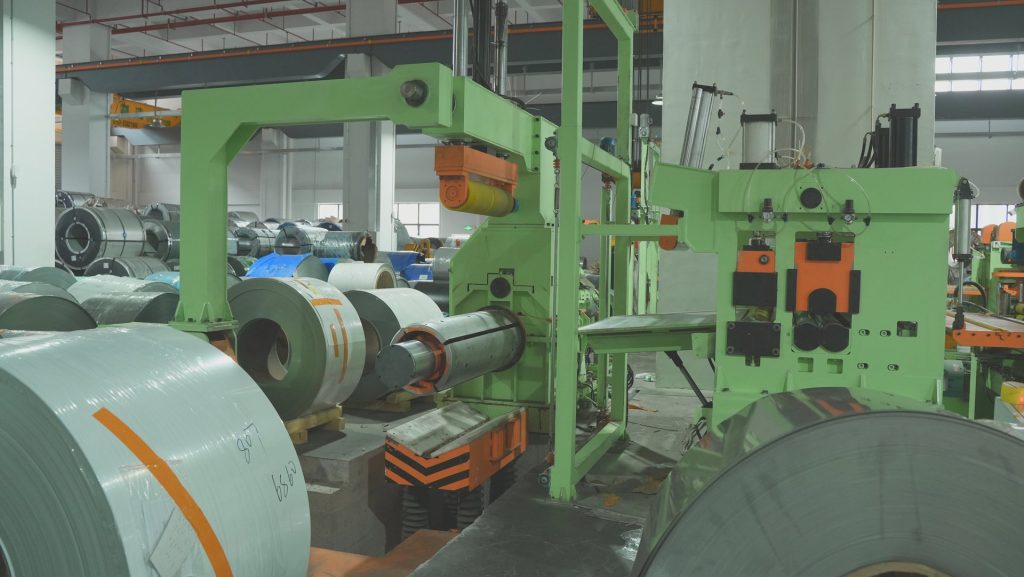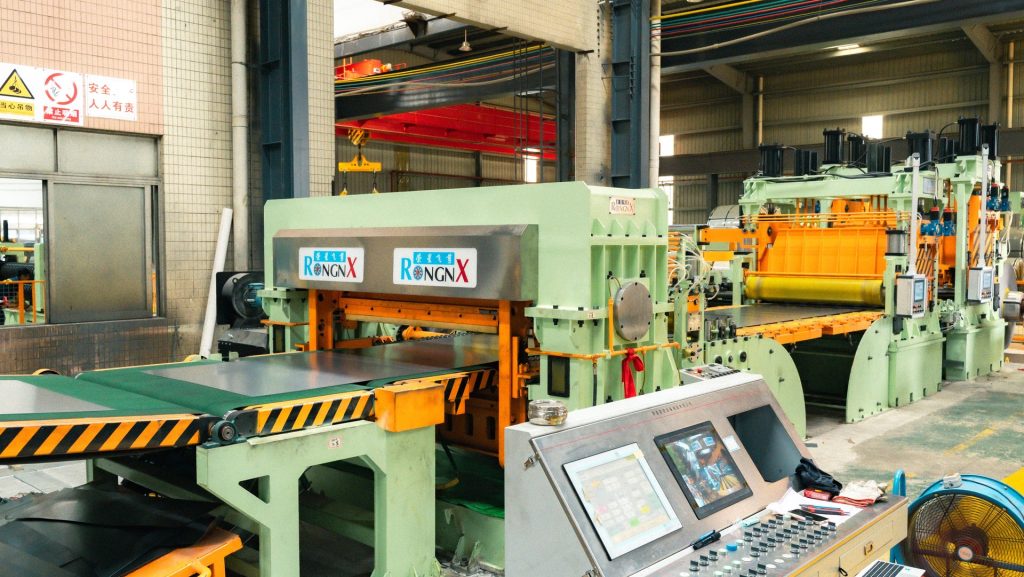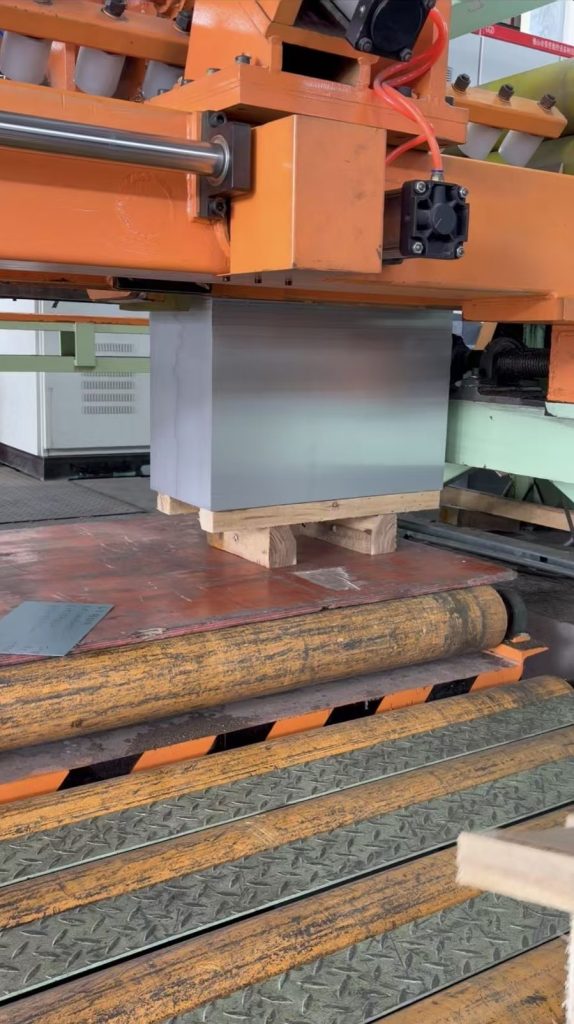
The cut edge from a flying shear cut-to-length line is shaped by more than a single blade-gap setting. Clearance, blade alignment, edge condition, frame stiffness and the relationship between cutter motion and strip speed all contribute. A professional setup therefore treats burr or edge deformation as a system symptom, not as a reason to change one value blindly.
Clearance must suit the production material
The required clearance changes with material type, strength and thickness. If the gap is unsuitable, the edge may show excessive rollover, fracture variation, burr or distortion. The adjustment should be based on the approved process specification and verified with representative coil, including the thinner and thicker parts of the operating range when both are important.
Blade parallelism and secure mounting matter just as much. A nominal gap measured at only one end does not prove that the working clearance is consistent across the strip. Inspection should therefore cover the complete cutting width, blade seating surfaces, fastening condition and evidence of local wear or damage.
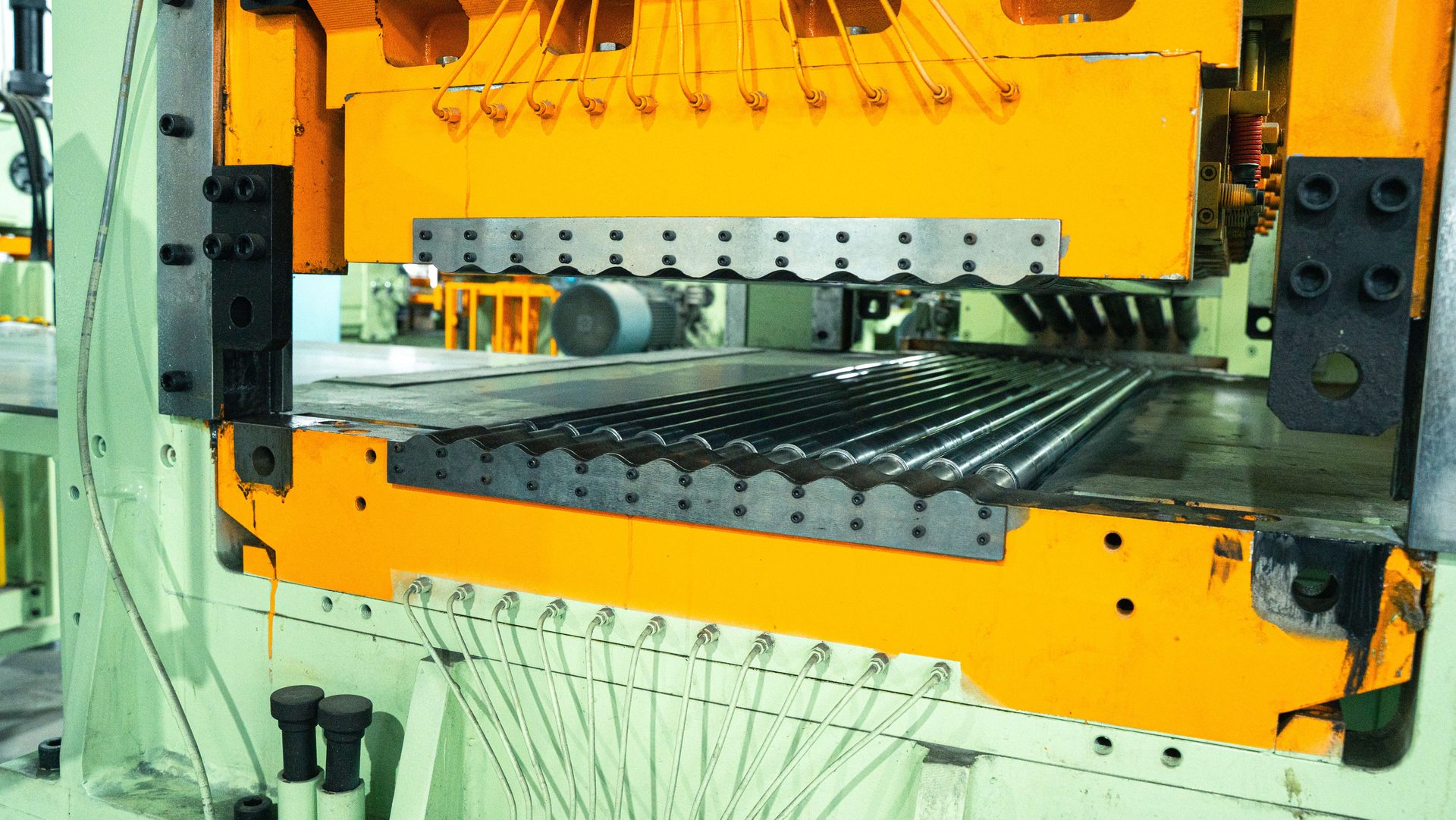
Dynamic cutting adds another requirement
In a flying shear, the material continues moving while the cutting mechanism follows the strip. The basic sequence is described in How Does a Flying Shear Work?. If synchronization is unstable, the sheet can be influenced by relative motion even when the static blade setup appears correct. Length signal quality, acceleration, mechanical play and strip support must therefore be assessed with the shear condition.
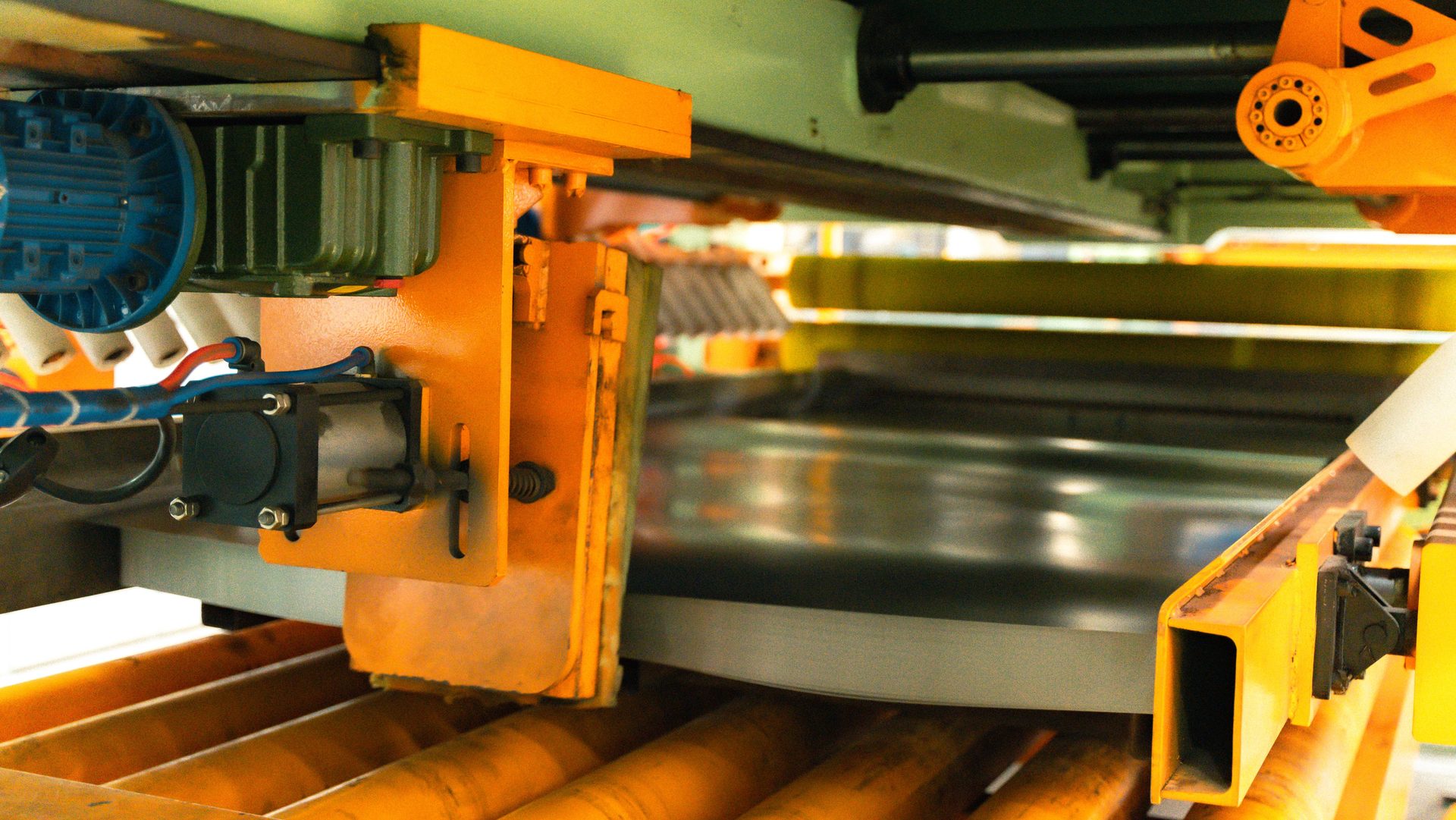
On wider work, the 1650mm Flying Shear line illustrates why stiffness, guiding and cutter setup are reviewed together. Width is not permission to reuse one clearance across every grade and thickness.
Use the cut edge to guide maintenance
Acceptance should sample sheets from a sustained run and compare both sides and several positions across the width. Record burr direction, edge consistency, visible deformation, cut length and diagonal against the agreed standard. When quality changes, first separate blade wear and alignment issues from strip tracking, support or synchronization issues.
The existing guide to flying-shear synchronization and cut accuracy supports that diagnosis. For a new line or a cutting-quality review, send RONGXING the material grade, thickness range and required edge standard so the blade and motion configuration can be evaluated against the real production range.