Tension leveling and roller leveling both improve strip flatness, but they are not interchangeable. A roller leveler repeatedly bends material through an adjustable roll arrangement. Tension leveling combines longitudinal tension with bending to equalize length differences across the strip. Selection depends on the material, defect pattern, surface requirement, line arrangement and downstream use.
For buyers specifying a cut-to-length line, the practical question is not which technology sounds more advanced. It is which process can deliver the required sheets across the real product range, at the agreed production condition, with a measurable acceptance method.
Roller leveling uses repeated alternating bending
A roller leveler guides strip through multiple rolls arranged to create a sequence of alternating bends. Roll penetration and machine settings are selected so the material is worked beyond the purely elastic range to a controlled degree, reducing coil set and improving shape before measuring and cutting. The exact response depends on thickness, yield strength, width, incoming shape and the leveler geometry.
Roller leveling is commonly integrated into cut-to-length lines because it fits a batch process that uncoils, levels, measures, shears and stacks sheets. Operators can adjust the leveler for different recipes, but one setting should not be expected to cover every grade and thickness. Excessive working may mark sensitive material or add unnecessary load, while insufficient working may leave residual curvature or unstable flatness.
The visible finished sheet should be evaluated after it has left the machine and settled under the agreed inspection condition. A sheet that appears controlled while supported on rolls can reveal coil set, crossbow or other shape after discharge. RONGXING’s article on how leveling determines flatness explains the relationship among incoming coil shape, leveler setup and downstream handling.
Tension leveling combines tensile load with bending
In tension leveling, the strip is placed under controlled longitudinal tension while passing through bending rolls. The combined action is intended to extend portions of the strip enough to reduce length differences across its width. This can be useful where continuous-strip flatness and shape control are central to the process.
The system requires coordinated tension zones and bending elements. Material strength, thickness, width, surface sensitivity, speed and correction duty influence the arrangement. It also affects drive, bridle, control and safety scope, so it cannot simply replace a roller leveler without redesigning the material path.
Tension leveling is not automatically the correct answer for every edge wave, center buckle or flatness complaint. Incoming shape, residual stress and material consistency vary. The required finished condition and the downstream operation must be defined first, followed by representative testing or engineering evaluation.
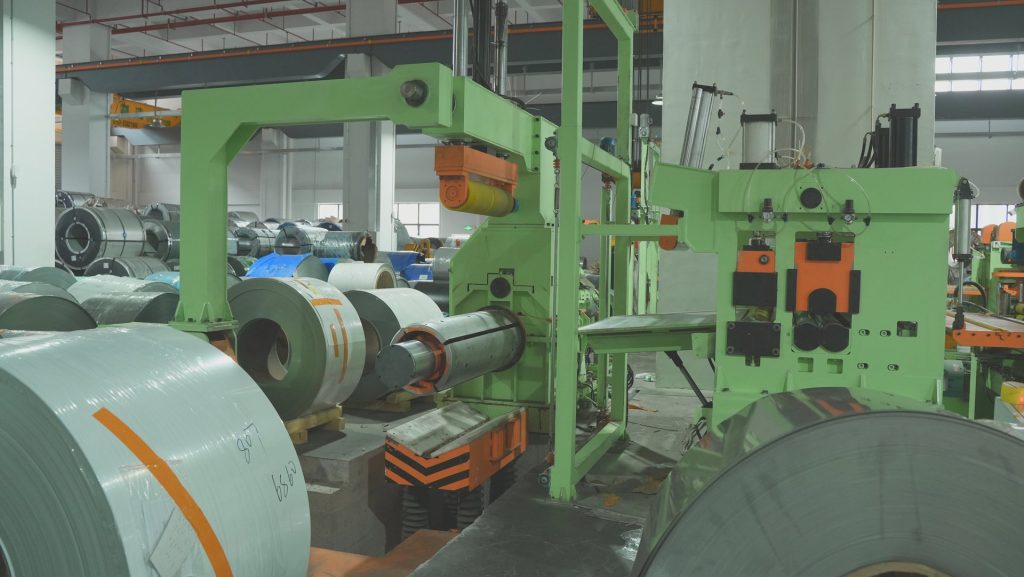
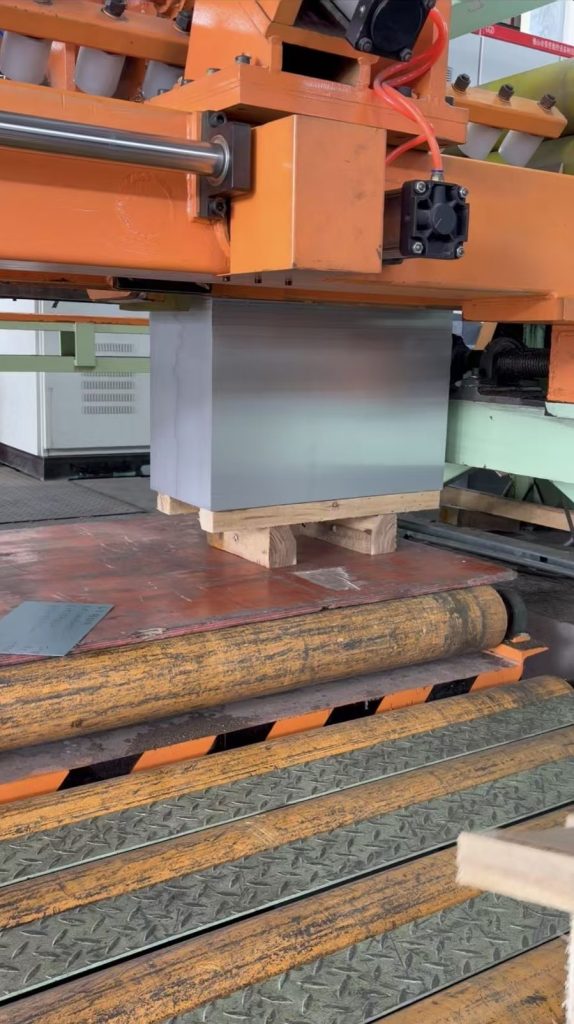
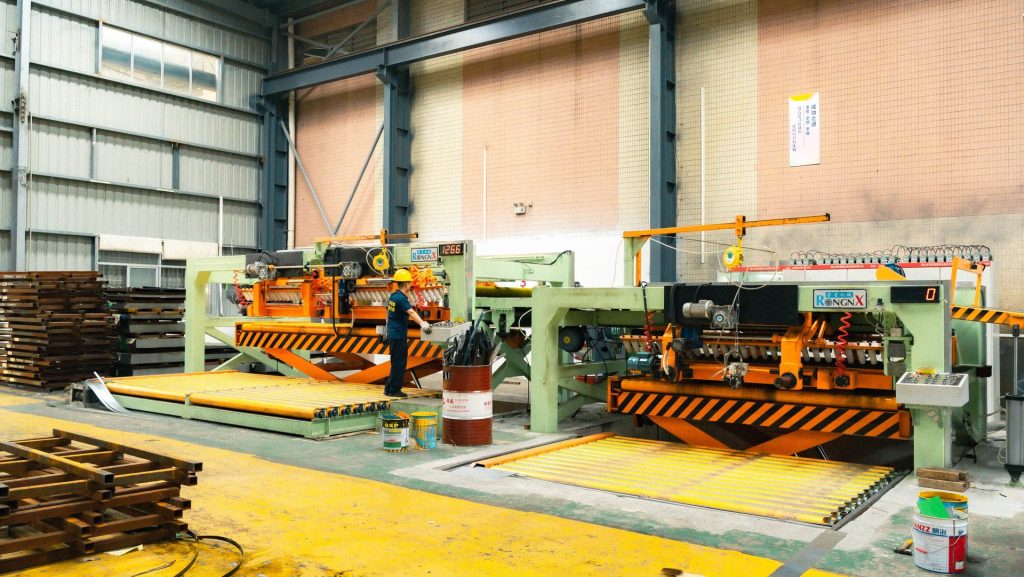
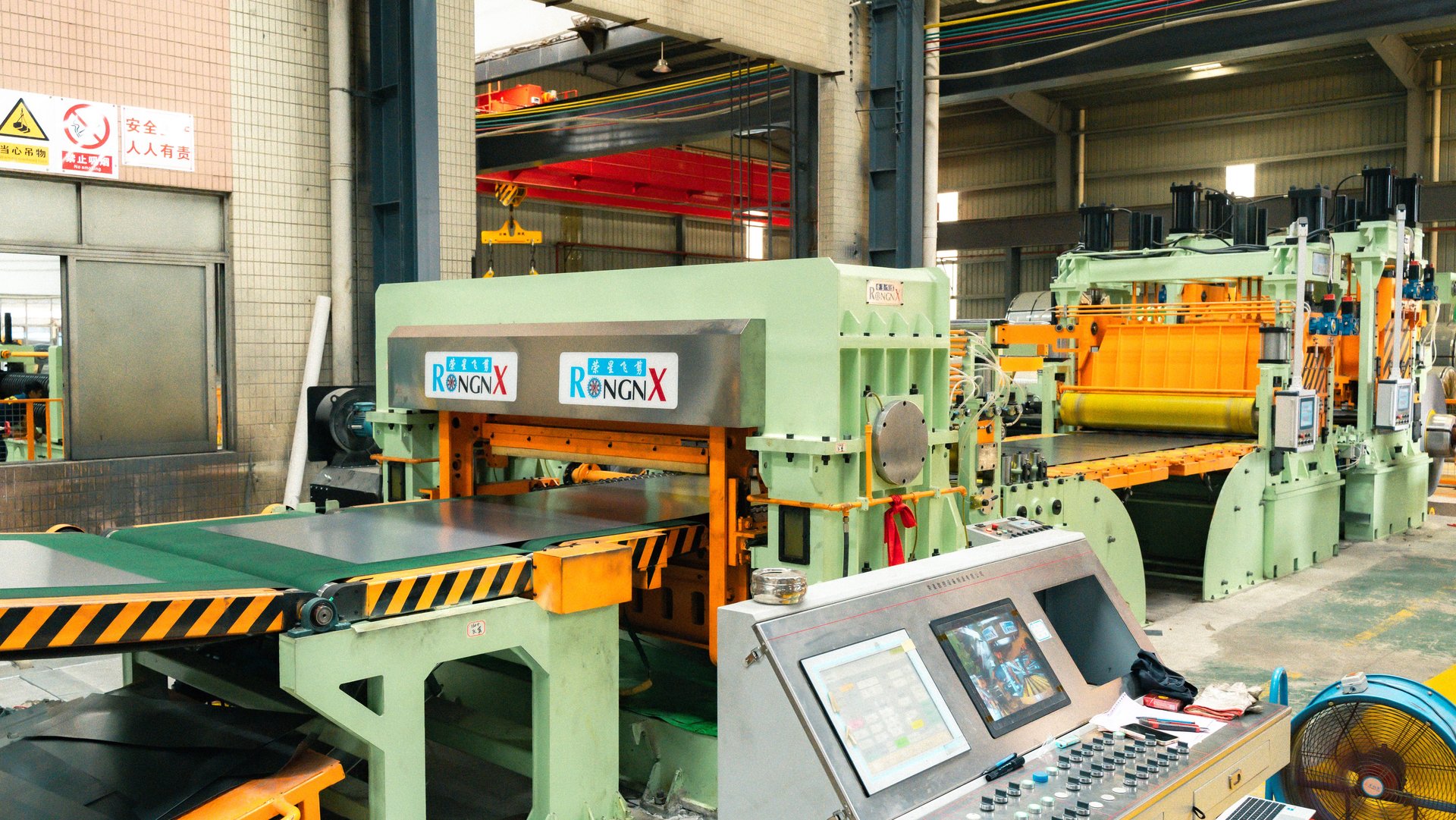
This article uses RONGXING roller-leveling cut-to-length images because those are the verified visual assets available for the current draft. It does not claim that the pictured equipment performs tension leveling.
Start with the defect and the production route
Selection should begin with evidence about the incoming material. Record coil set, crossbow, edge wave, center buckle, camber, thickness variation and surface condition using an agreed method. Identify whether the product will remain as continuous strip, be slit and recoiled, or be cut into sheets. The same visible defect can carry different consequences in a press feed, laser-cutting process, coating line or exposed-surface application.
Roller leveling in a cut-to-length line can be a practical route when the production objective is controlled sheet flatness across a defined thickness and strength range. Tension leveling may be considered when a continuous process and shape-equalization duty justify the additional tension and control sections. Neither description replaces a technical evaluation of the actual product range.
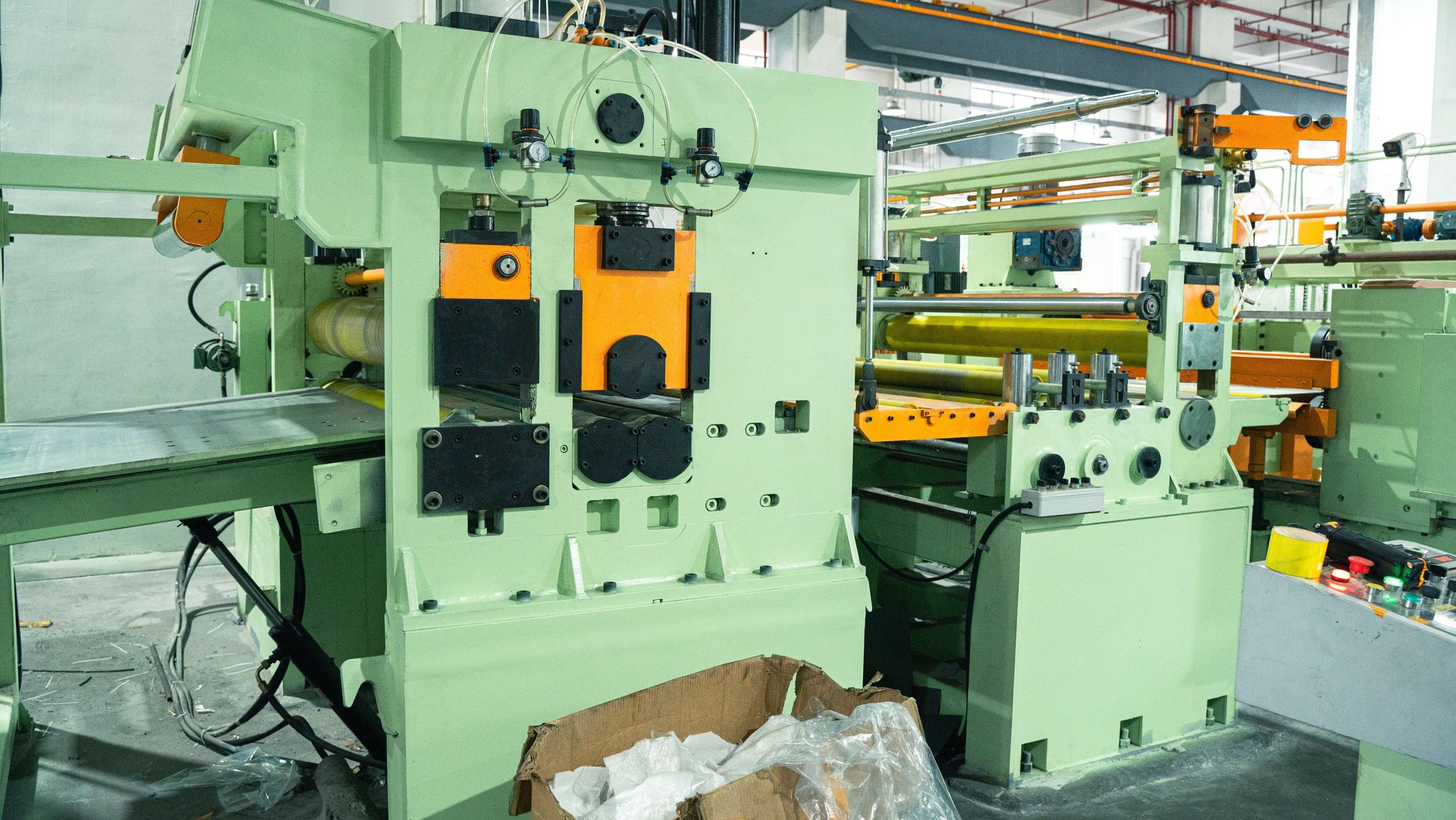
Surface quality can change the decision. Stainless, aluminum, coated or appearance-sensitive products require clean and appropriate contact surfaces. A process that improves flatness but creates roll marks, scratches or coating damage does not meet the complete quality requirement. Cleaning access, roll condition and material-protection practices should therefore be included in the specification.
The flying-shear working-principle guide shows how leveling fits before measurement and continuous-motion cutting in a complete line. Shear type does not correct incoming shape by itself; stable cutting depends on material arriving under controlled conditions.
Specify a material envelope instead of one sample coil
A buyer should provide a table showing material grade or strength range, minimum and maximum thickness, width, coil weight, surface type and normal production mix. Identify the most difficult combinations rather than combining every maximum into an artificial case. Include representative incoming-shape data and the required finished-flatness measurement.
State finished length range, operating condition, stacking method, downstream use and changeover frequency. A leveler selected only for the thickest product may not control the thinnest material, while a light-strip system may not cover stronger products.
Define adjustability, recipe records, roll cleaning and maintenance access. Ask how settings will be documented and repeated after tooling work or product change. If multiple materials are important, the acceptance plan should include more than one representative recipe.
Do not request “perfect flatness” without an inspection method. Specify the reference surface, sample dimensions, unsupported or supported condition, measurement locations, temperature condition and acceptable result. This avoids a dispute in which the machine supplier and buyer evaluate the same sheet differently.
Verify the result after cutting and handling
Flatness can be influenced after the leveler. Measuring rolls, shear support, conveyors, drop height and stacking can affect how a sheet is presented or damaged. Acceptance should therefore inspect the product at the point where the buyer actually uses it, not only while it is held inside the line.
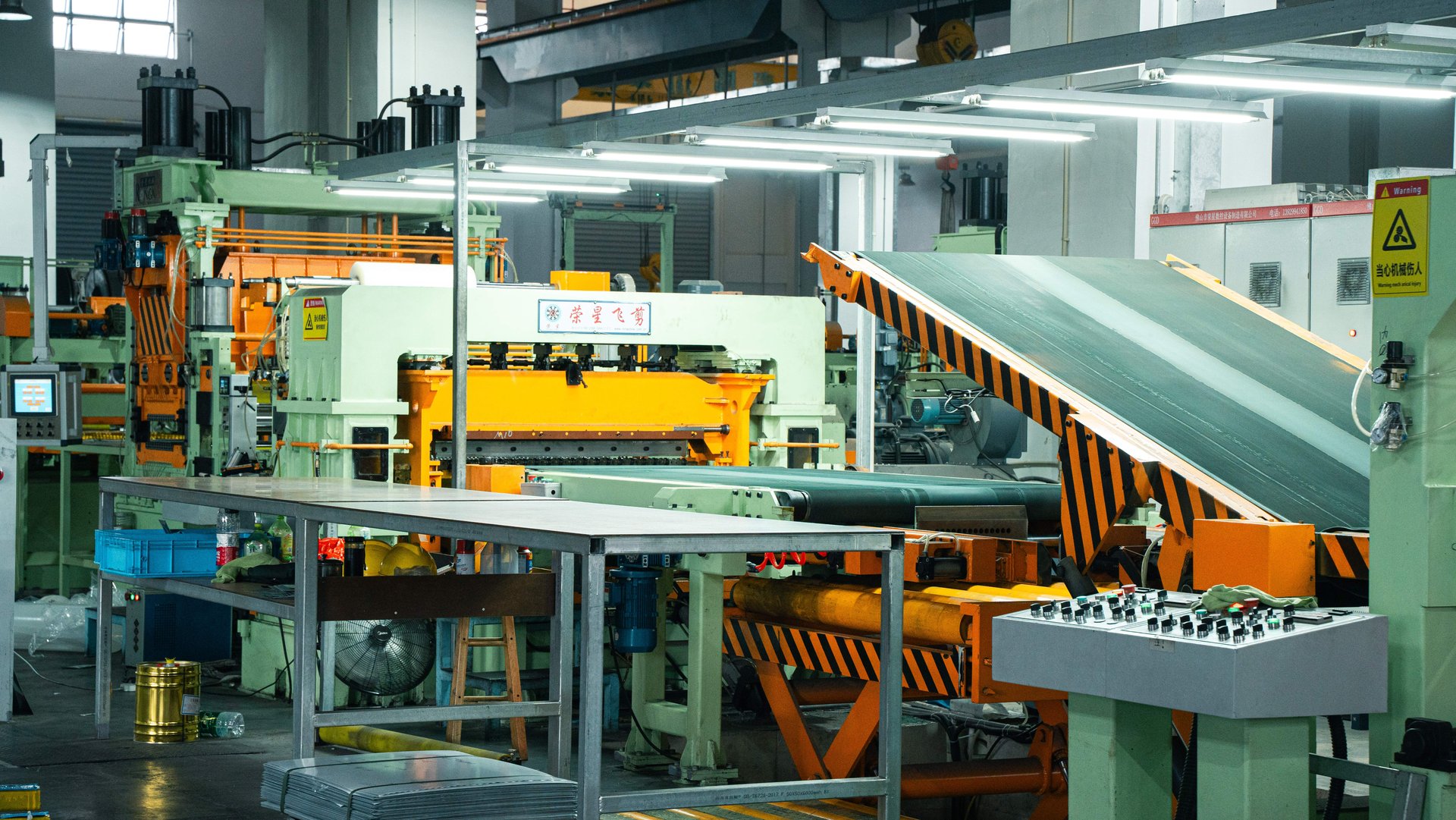
Use a controlled run long enough to establish a stable condition. Record the coil, recipe, leveler settings, speed, sample order and measurement result. If the sheet changes as coil diameter decreases or speed changes, preserve that pattern for diagnosis. Adjust one verified variable at a time and repeat the same inspection method.
The commercial quotation should clearly name the proposed leveling process and its included sections. If a tension-leveling line is under consideration, confirm tension zones, drive and control scope, strip threading, safety, foundations and downstream integration. If a roller-leveling cut-to-length line is proposed, confirm roll arrangement, adjustment method, material envelope, cutting and stacking scope, and finished-sheet acceptance.
RONGXING’s service page can support discussions about installation, commissioning, training and maintenance planning. For equipment selection, send the material table and flatness requirement, together with sample defect records where available. That evidence is more useful than selecting a process name before the production problem is defined.