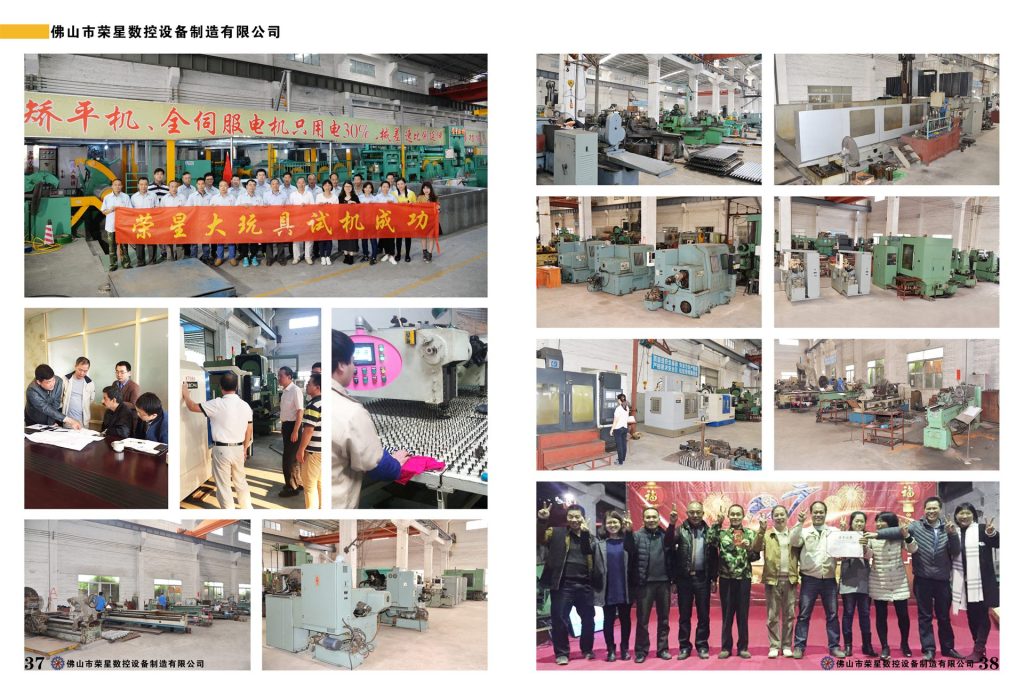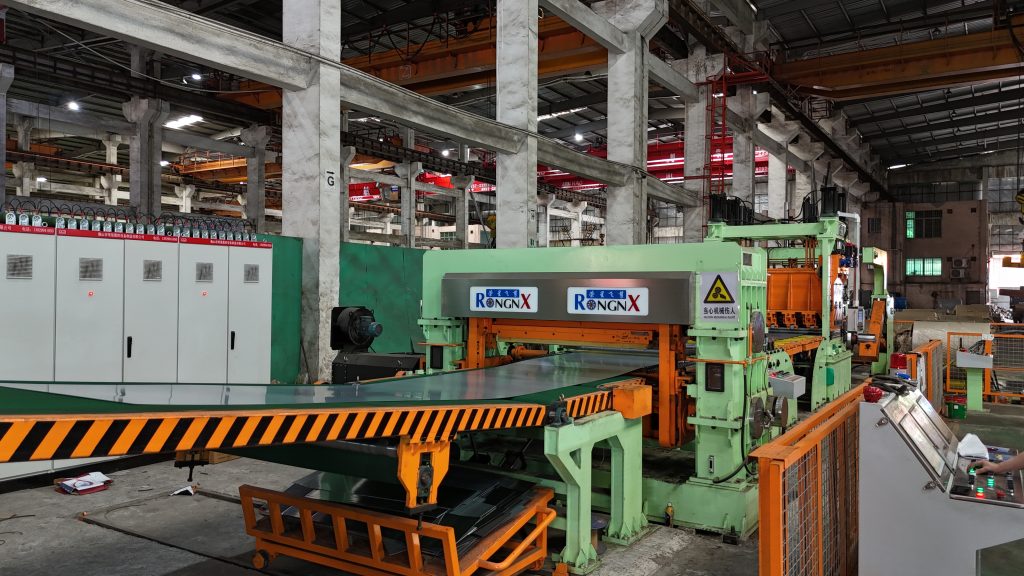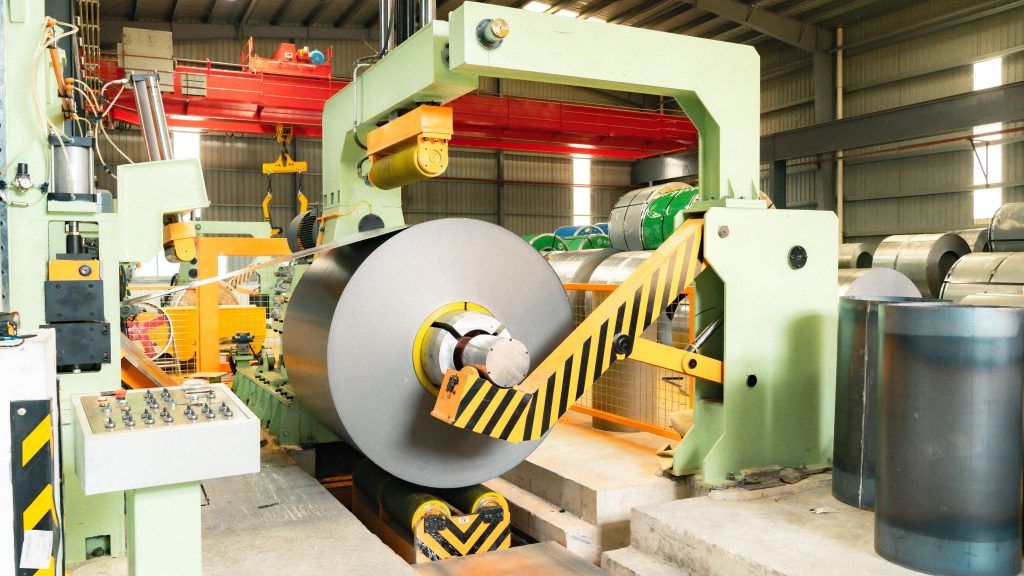
A customer-site acceptance test is a controlled sequence in which the commissioning team stabilizes every stage of the 850mm Flying Shear Cut-to-Length Line, then checks the finished sheets against the approved technical agreement. The coil, settings, sample method, speed and results should be recorded so the accepted recipe can be repeated.
This acceptance sequence is part of the wider RONGXING flying shear cut-to-length line process from coil handling to finished-sheet stacking.
Start with the coil and a controlled strip path
Acceptance begins at loading and uncoiling. The coil is secured, centered on the mandrel and aligned with the processing centerline. The hold-down arm, expansion pressure, entry guide and payoff resistance are adjusted so the strip enters without telescoping, lateral drift or sudden tension changes. Guarding, emergency stops and safe threading access are checked before automatic operation.
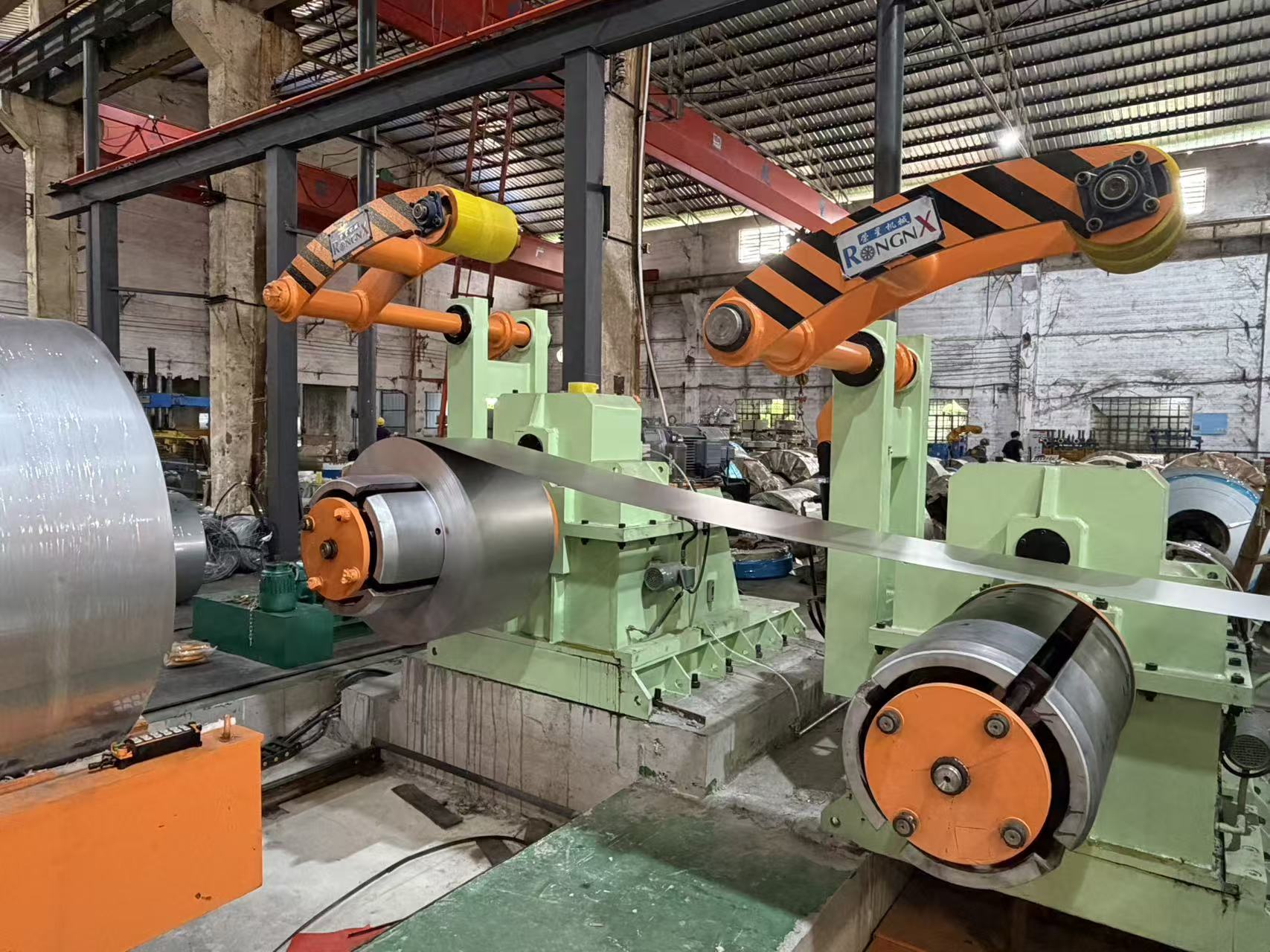
Thickness, width, strength, coil set and surface condition all change strip behavior. The entry path should therefore be stabilized before correcting downstream length or stacking. Other widths are shown in the RONGXING cut-to-length line range, but this machine’s acceptance values remain those in its own contract.
Tune leveling, measurement and flying-shear synchronization together
The leveler is adjusted gradually rather than using one setting for every coil. Roller penetration and entry/exit conditions are changed in small steps; sample sheets are checked for flatness, coil set and pressure marks. If results change through the coil, the setting is corrected and recorded.
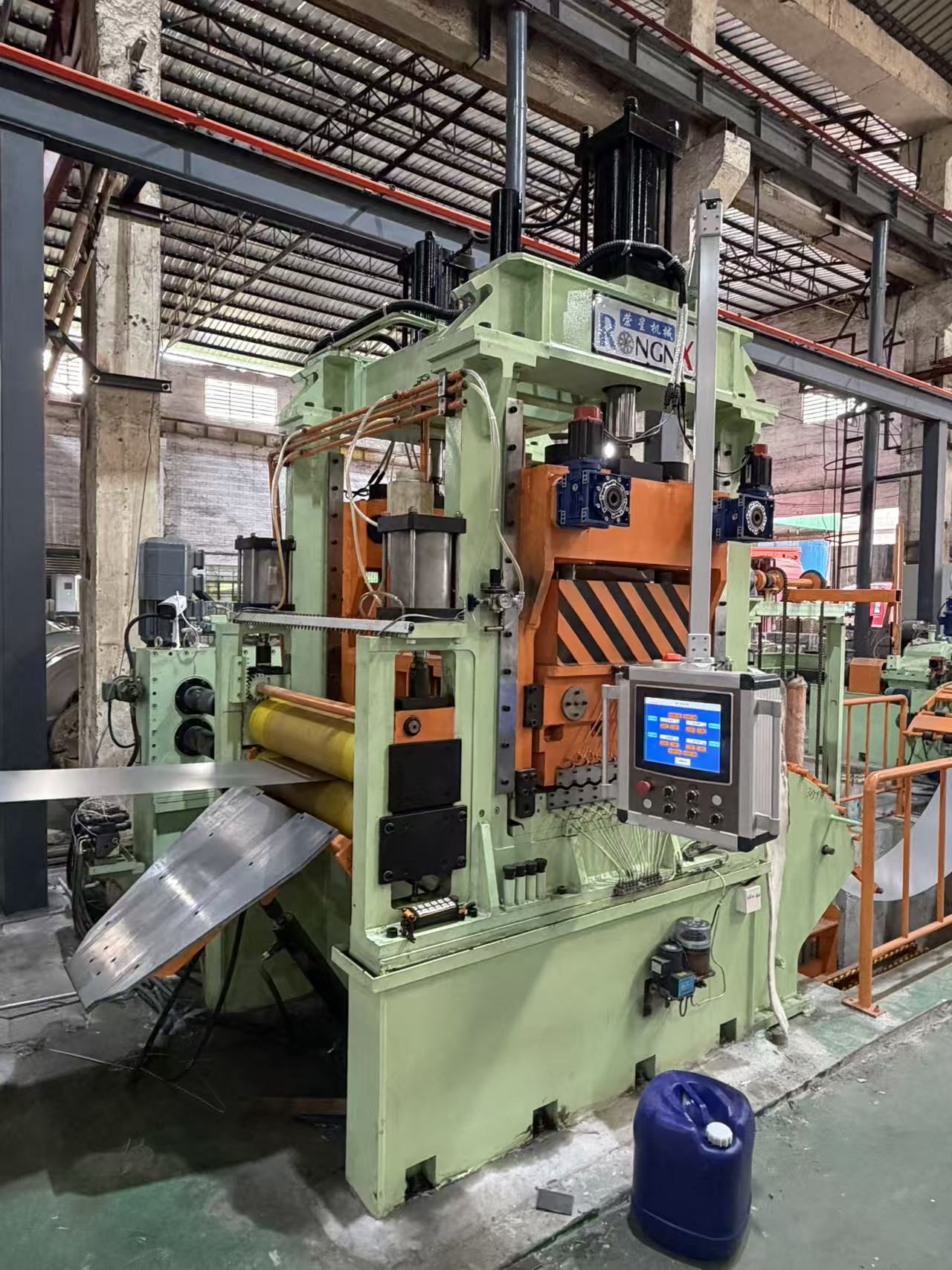
Length control requires stable measuring contact and synchronized motion. The team verifies the encoder signal, checks for strip slip and compares consecutive sheets using the agreed method. Flying-shear timing is tuned so the cutter follows the strip without pulling, buckling or marking it. How Does a Flying Shear Work? explains the principle, while this customer-site trial-run video shows the 850mm line with material.
Accept the stack only after the sheet surface is protected
Cut accuracy is not enough if transfer or stacking damages the sheet. Conveyor speed, side guides, end stops and stacking timing are adjusted for square arrival with low drop and impact. Contact surfaces must be clean and burr-free. Non-marking rollers, belts or pads are used where specified; sensitive material may require film, separator paper, anti-rust paper or another approved layer. Metal-to-metal impact and dragging over a dirty stack must be avoided.
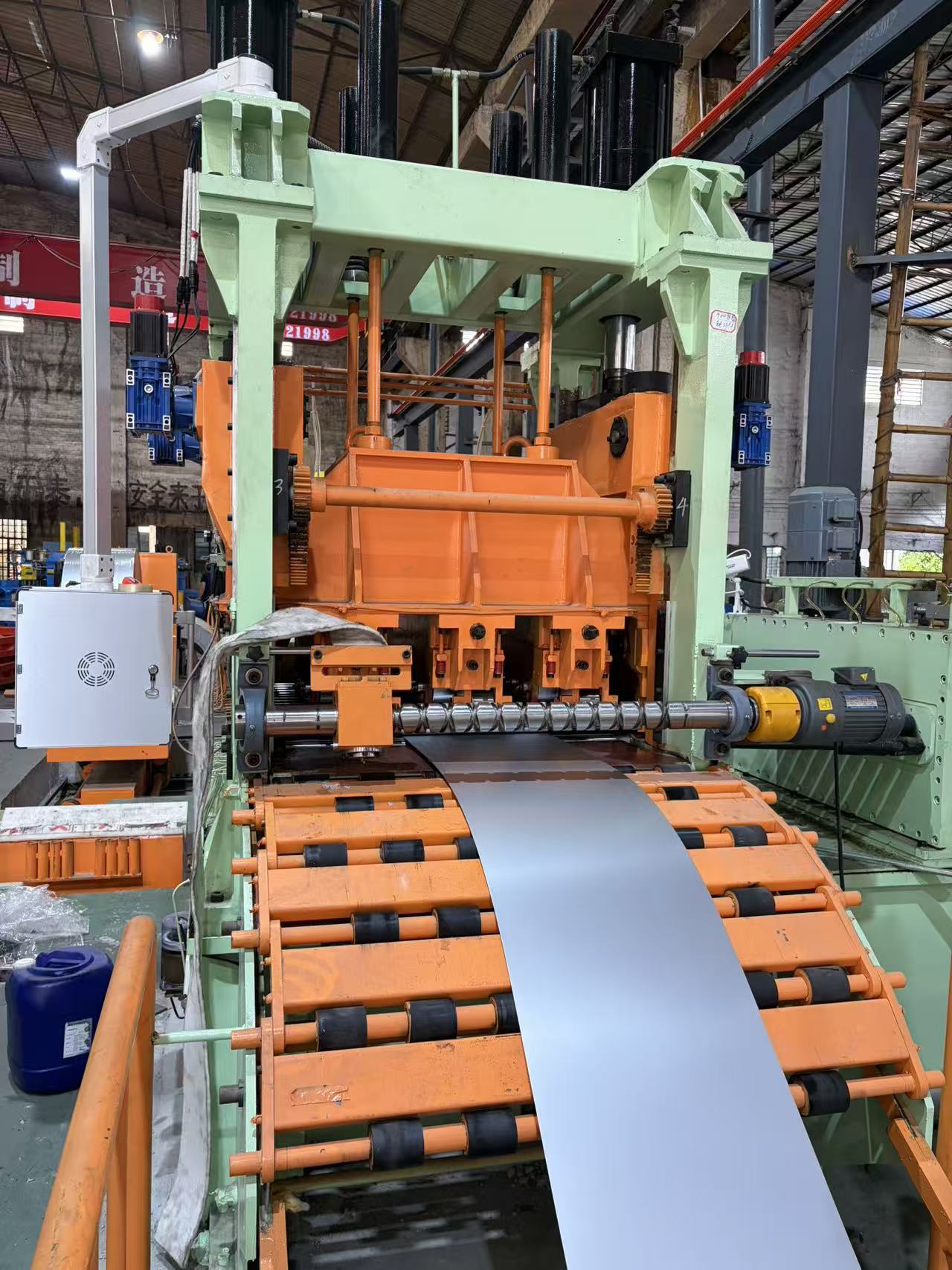
Final acceptance reviews the agreed length tolerance, diagonal, flatness, edge condition, surface marks, transfer stability and stack alignment over a representative run. Every limit must come from the approved specification, not a generic online value. RONGXING can include commissioning and operator guidance within the agreed service scope. For a similar project, send the coil data, finished-sheet requirements and acceptance criteria.