
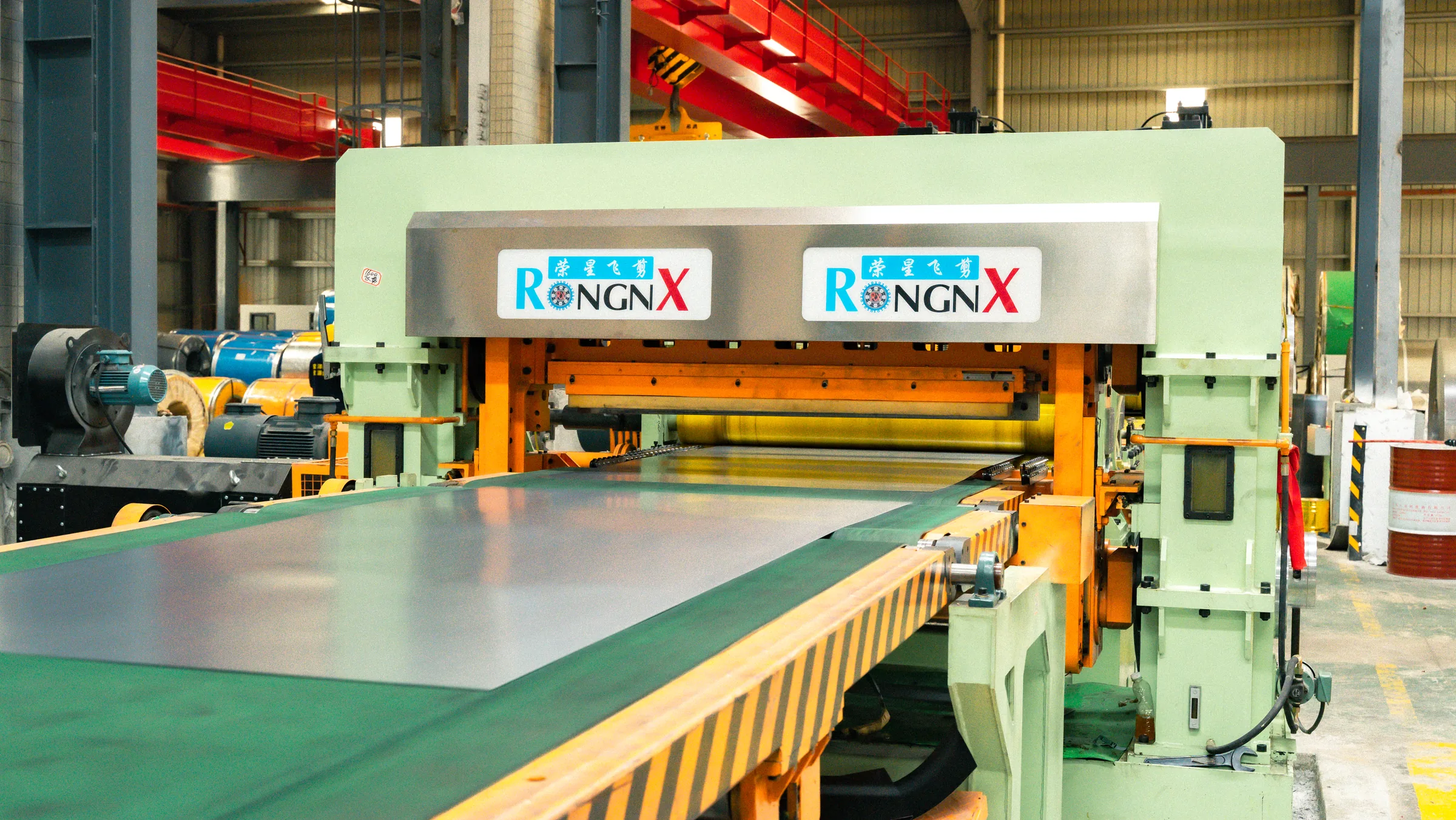
A dual stacker is not automatically the better choice for every cut-to-length line. It provides a second receiving position, but the value of that position depends on how bundles change, how sheets are separated, how finished material is removed, and whether the rest of the line can continue at the same rhythm.
Stacker selection should be reviewed within the complete flying shear cut-to-length line because cutting rhythm, conveying and bundle removal are connected.
A single stacker can be the correct solution when one receiving position supports the required output and bundle workflow. The choice should be based on actual sheet and handling data, not on the assumption that more equipment always means more production.
How the stacking arrangement changes the production rhythm
In a single-stacker line, finished sheets travel from the shear and conveyor to one stacking position. The stack grows until the planned bundle condition is reached. The line then follows the agreed bundle-change sequence, which may involve stopping, slowing, diverting material, or using another handling step, depending on the design.
This arrangement can be direct and easy to understand. It uses one main receiving position and may require less floor space, guarding, control logic, and bundle-removal equipment than a two-position system. Those points can be useful when the production target and change frequency do not justify a second stack.
The important question is what happens when the bundle is complete. If the line must wait while the bundle is secured and removed, that waiting time becomes part of production. It may be acceptable for long sheets, large bundles, short shifts, lower change frequency, or a process where operators already stop for inspection or product changes.
A dual stacker adds a second receiving position. In an appropriate design, sheets can be directed to the available position while the other stack is completed or prepared for removal. This can reduce the interruption associated with some bundle changes and can support production programs that need more frequent receiving changes.
The second position does not make every line “non-stop.” Coil changes, recipe changes, inspections, alarms, downstream limits, sheet-size changes, stacker faults, and bundle-removal delays can still require a slowdown or stop. The practical benefit comes from solving a specific stacking interruption, not from removing every interruption in the process.
Dual stacking also adds coordination. The conveyor and control system need to direct each sheet to the correct position, the stacker needs to maintain a usable pile, and operators or handling equipment need to remove finished bundles without interfering with the active side. The factory layout must provide safe access to both positions.
| Selection point | Single stacker | Dual stacker |
|---|---|---|
| Receiving positions | One | Two |
| Bundle-change approach | The one position follows the planned change sequence | One position may receive while the other is changed, when the design and product allow |
| Main advantage | Direct layout and handling flow | More flexibility around some bundle changes or product separation |
| Main added requirement | Bundle removal must fit the line rhythm | Additional space, controls, guarding, conveying logic, and removal planning |
| Best basis for selection | Required output and acceptable interruption | A defined need for alternating positions, frequent changes, or separate stacks |
The table shows the operating difference, but it does not decide the project. Sheet behavior, bundle size, removal time, and the complete line cycle still need to be reviewed.
What determines whether a second stack is useful
Start with the sheet program. Provide minimum, maximum, and normal sheet length and width, together with thickness, material strength, surface, and expected sheet weight. Short, light sheets behave differently from long, wide, or heavy sheets while leaving the conveyor and settling onto a stack.
Surface-sensitive material may need special attention to contact points, sliding, marking, air flow, interleaving, or protective handling. Do not assume that the same stacking method suits carbon steel, stainless, aluminum, galvanized, and pre-painted material. The required arrangement must be confirmed for the actual surface and configuration.
Bundle information is equally important. State the number of sheets, target bundle height or weight, separator or pallet use, strapping or packaging step, and how the finished bundle will leave the stacking area. A second receiving position has limited value if both completed bundles still block the same crane, forklift, or discharge aisle.
Measure the real bundle-change time. It includes more than lifting the stack. Operators may need to confirm count, add protection, label, strap, position lifting tools, remove the bundle, clear the area, and prepare the next pallet or separator. If these steps occur often, the production impact may justify another receiving position.
Output should be checked using the main production program. A line producing short sheets may reach the planned bundle count quickly, while longer sheets or larger bundles may change less often. The number of sheets per bundle, cutting frequency, operating hours, and planned product changes all influence how frequently the stacker becomes the limiting section.
Product separation can be another reason for two positions. A factory may want alternating stacks for different orders, sample sheets, inspection sequences, or a planned changeover. This must be described precisely so the supplier can confirm whether the proposed conveyor and stacker logic can perform the sequence.
Floor space and access can decide the issue even when two positions appear useful. The layout needs room for the stacker, guards, platforms, sensors, maintenance, operators, lifting equipment, and bundle travel. Crane coverage or forklift approach must reach both sides safely without crossing the active sheet path.
The upstream sections must also support the target rhythm. A dual stacker cannot compensate for a leveler, shear, conveyor, inspection process, or coil-change method that already limits output. Before adding the second position, identify where production currently loses time and confirm that stack changes are a significant cause.
Compare the complete handling system, not only the stack count
Ask how sheets move from the shear to the stacker. Conveyor speed, sheet separation, support, alignment, braking, and release affect whether each sheet reaches the correct position. The proposal should explain the sequence for normal sheets, the shortest and longest sheets, sample pieces, crop material, and any rejected sheet.
Ask how the stack is formed. Side alignment, end alignment, drop height, sheet support, and pile condition can influence the finished bundle. The answer should match the material and surface rather than rely on a generic statement such as “automatic precision stacking.”
Ask what changes when the active position switches. The supplier should explain which signal starts the change, how the last sheet is identified, how the next sheet is directed, what the operator sees, and what happens if the other position is not ready. A clear sequence is more useful than a long list of control components.
Ask how finished bundles are removed. A dual stacker may need two discharge routes, two stacker cars, a shared removal aisle, or a planned crane sequence, depending on the design. Confirm which equipment is included in the quotation and which handling work remains the buyer’s responsibility.
Ask how product data and bundle counts are managed. Recipe settings, sheet count, stack selection, alarms, and manual recovery should be explained in terms of operator actions. Do not assume that every possible automatic function is included unless it appears in the quoted scope.
Maintenance and recovery matter as well. Sensors, conveyors, alignment devices, lifting mechanisms, and guards need access. The supplier should explain how the line is made safe, how a misplaced sheet is removed, and how production restarts after a stacker alarm.
For projects where dual stacking has a real purpose, review the RONGXING 1000mm Dual-Stacking Flying Shear Cut-to-Length Line as a configuration reference. The final arrangement still needs to be checked against the project material, sheets, output, bundle plan, and site.
Information to prepare and common questions
Prepare these details before requesting a stacker proposal:
- material, thickness, width, strength, coating, and surface condition;
- normal, minimum, and maximum sheet sizes;
- expected sheet weight and behavior where available;
- sheets per bundle, bundle height or weight, and bundle-change frequency;
- pallet, separator, interleaving, counting, labeling, or packaging needs;
- target output and acceptable interruption during a bundle change;
- crane, forklift, stacker-car, conveyor, or other removal method;
- available floor space, clear height, aisle position, and operator access;
- reason for considering two positions rather than one.
This information allows the stacker to be discussed as part of the production line instead of as an isolated option.
Does a dual stacker make the whole line non-stop? No. It can reduce some bundle-change interruptions when the design and production program allow, but coil changes, alarms, inspections, product changes, and other line limits can still stop production.
Is a single stacker only for low-output lines? No. A single stacker can support different output levels when the sheet program, bundle size, change method, and removal workflow fit one receiving position.
Can one side of a dual stacker receive while the other bundle is removed? That is a common reason to consider two positions, but it must be confirmed for the actual mechanical layout, control sequence, sheet range, guarding, and removal method.
Can a dual stacker separate two products? It may support a planned separation sequence, but the supplier needs the exact sheet program, counting rule, switching logic, and removal plan before confirming it.
Does surface-sensitive material require a special stacker? It may require different contact, support, interleaving, or handling measures. The correct arrangement depends on the material surface and accepted finished condition.
What is the most important number for stacker selection? There is no single number. Sheet range, material, bundle plan, cutting frequency, output, change time, removal equipment, and floor space must be reviewed together.
To discuss the stacking arrangement for a new line, send RONGXING the sheet program, bundle plan, required output, removal method, and workshop layout through the Contact page. The engineering review can then determine whether one or two receiving positions solve the real handling requirement.
FAQ
Does a dual stacker make the whole line non-stop?
No. It can reduce some bundle-change interruptions when the design and production program allow, but coil changes, alarms, inspections, product changes, and other line limits can still stop production.
Is a single stacker only for low-output lines?
No. A single stacker can support different output levels when the sheet program, bundle size, change method, and removal workflow fit one receiving position.
Can one side of a dual stacker receive while the other bundle is removed?
That is a common reason to consider two positions, but it must be confirmed for the mechanical layout, control sequence, sheet range, guarding, and removal method.
Can a dual stacker separate two products?
It may support a planned separation sequence, but the supplier needs the exact sheet program, counting rule, switching logic, and removal plan before confirming it.
Does surface-sensitive material require a special stacker?
It may require different contact, support, interleaving, or handling measures. The correct arrangement depends on the material surface and accepted finished condition.
What is the most important number for stacker selection?
There is no single number. Sheet range, material, bundle plan, cutting frequency, output, change time, removal equipment, and floor space must be reviewed together.