
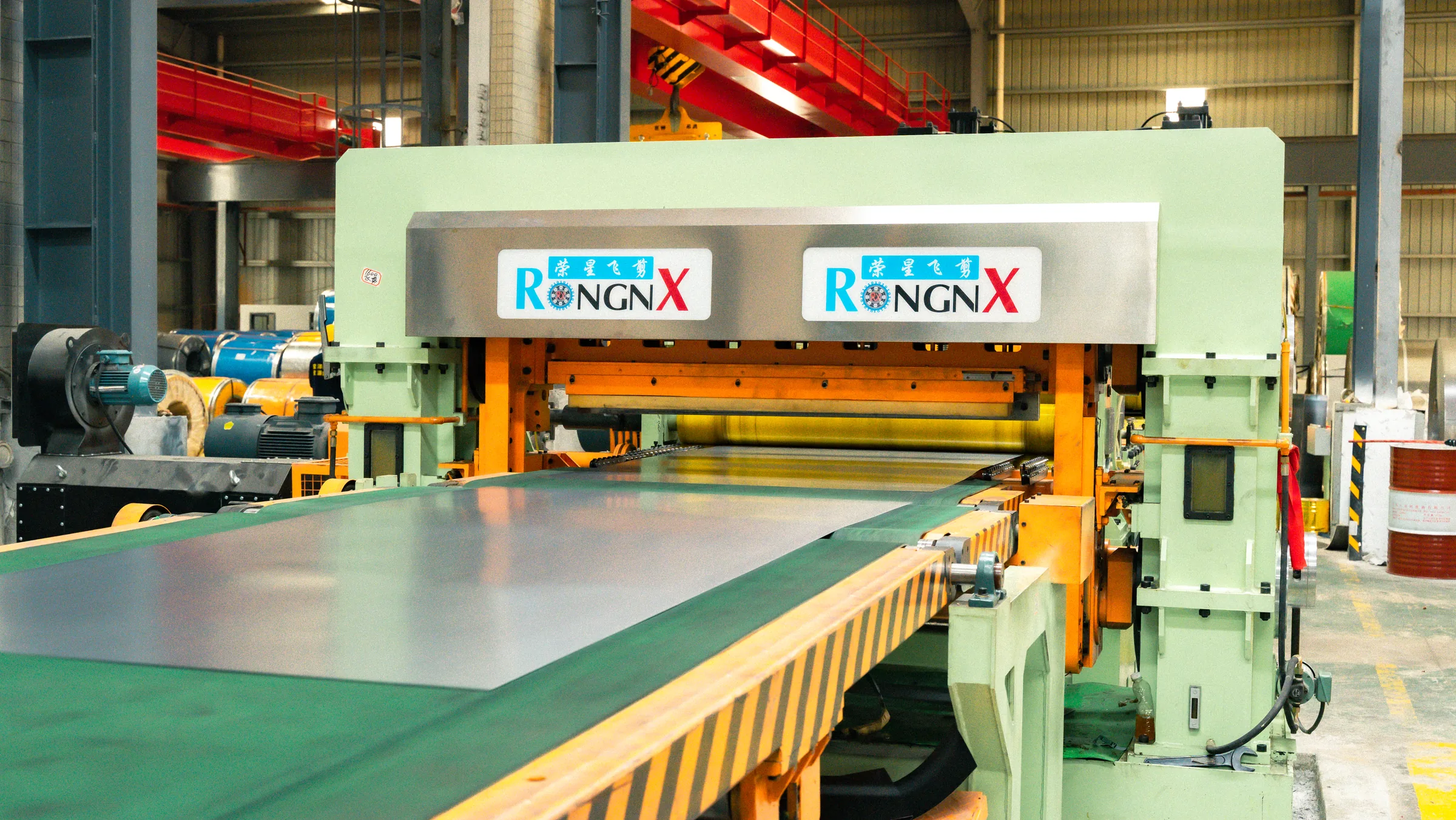
A useful cut-to-length line specification does not begin with a model name. It begins with the incoming coil, the finished sheets, and the way the factory plans to handle both. Width and thickness matter, but they are not enough to select the uncoiler, leveler, measuring system, shear, conveyor, stacker, drives, or controls.
The RONGXING Flying Shear Cut-to-Length Lines page provides the model range and reference process flow to use with this specification checklist.
The purpose of an RFQ is not to fill every page with technical language. It is to give the equipment supplier enough real production information to identify the correct questions, separate standard requirements from special ones, and prepare a proposal that can be checked later.
Start with the material and coil
State the material type and grade as clearly as possible. “Steel coil” can cover materials with very different strength, surface, and leveling behavior. If the grade is not yet fixed, provide the material standard, expected yield or tensile strength, or samples from the planned supply.
Strength matters because two coils with the same width and thickness may place different loads on the leveler, feed section, and shear. The supplier needs to consider the material together with the full working range rather than treating the thickest coil as the only design point.
Provide minimum and maximum thickness and width, but also identify the sizes that will run most often. A machine designed only around the largest possible coil may not automatically give the best setup for the normal production mix. The quotation should show that both the operating range and the main production range have been reviewed.
Surface information should not be left until the end. Stainless steel, aluminum, galvanized, pre-painted, polished, or coated material may need different contact surfaces, cleaning practice, protective film or paper handling, conveying, and stacking arrangements. Only list a surface-protection option when it is needed for the real material.
Incoming coil condition also affects the line. Coil set, crossbow, camber, edge condition, thickness variation, telescoping, and storage damage can influence guiding, leveling, measurement, and stacking. A new line cannot correct every defect in the incoming material, so samples and acceptance conditions should be discussed when flatness or surface quality is important.
The coil data should include inner diameter, outer diameter, maximum weight, and winding direction. These values influence the coil car, uncoiler expansion range, support arrangement, braking or drive requirements, and factory handling method. The supplier should also know how coils will arrive at the line and how the operator will load them safely.
Avoid combining unrelated maximum values into one imaginary production case. The widest coil, thickest material, highest-strength grade, shortest sheet, and highest speed may never occur together. Provide a simple production table showing which material, thickness, width, and sheet-length combinations are actually expected.
Describe the finished sheets and production target
List the normal, minimum, and maximum finished-sheet lengths. The normal lengths are especially important because they determine the usual cutting frequency, conveyor spacing, stacking cycle, and bundle plan. A single special long or short order should be identified separately so it does not distort the design of the main line.
Do not write “high accuracy” without an agreed definition. State which finished conditions must be checked: cut length, diagonal or squareness, flatness, edge condition, burr, surface marks, or stacking quality. Each item needs a test method and a production condition. A requirement measured on one sheet at low speed is not the same as a requirement maintained during a complete normal production run.
The leveler must be selected from the material and finished-sheet requirement, not from roll count alone. Material strength, thickness range, width, incoming coil condition, and expected flatness all matter. If several very different materials are planned, identify the main product and the less frequent products so the supplier can explain where setup changes or additional equipment may be required.
Output should be expressed in terms that describe real work. Maximum line speed is only one part of the cycle. Sheet length, cuts per minute, coil change, recipe change, inspection, bundle size, stacker change, and bundle removal all affect production.
A better production description might include the main material, normal sheet length, sheets per bundle, bundles per shift, planned operating hours, and acceptable interruption for coil or bundle changes. This lets the supplier check whether the cutting section and downstream handling can operate at the same pace.
If several products will share the line, give a small production mix rather than one target speed. A continuous cutting method may be useful for one program, while another program may be limited by leveling, short-sheet handling, surface protection, or stacker capacity. The line should be configured around the production mix that matters to the business.
Explain what will happen after the sheets leave the line. Will bundles go directly to storage, a press, a laser, a packaging area, or another process? The answer affects bundle height, pallet or separator requirements, discharge direction, weighing, labeling, and the equipment used to remove each bundle.
Include stacking, layout, and factory conditions
The stacker should be specified with the same care as the shear. Provide the sheet-size range, material and surface, expected bundle size, bundle change method, and removal equipment. A stacking system that cannot receive or release sheets at the required rhythm will limit the complete line.
If a dual-stacking arrangement is being considered, explain why. The reason may be bundle changes, product separation, alternating receiving positions, or a particular production sequence. A second position adds equipment, controls, layout, guarding, and bundle-handling work. It should solve a defined production problem rather than serve as a general “higher automation” option.
Provide a factory layout with available length, width, clear height, column positions, doors, aisles, pits, foundations, crane coverage, and coil and bundle routes. The drawing does not need to be final, but it should show the real boundaries. The line direction and operator side should be agreed before the electrical cabinets, platforms, controls, and maintenance access are fixed.
State the available electrical supply and any site rules that affect installation. Foundation limits, compressed air, hydraulic-service access, ambient conditions, local guarding requirements, and cable routes can change the equipment scope. If the project will be installed in stages, identify which work belongs to the supplier and which belongs to the buyer.
Coil loading and finished-bundle removal should be treated as part of the workflow. Confirm the crane or forklift capacity, travel path, lifting tools, aisle width, and storage position. A line can pass a factory test and still create a production bottleneck if coils cannot be loaded or bundles cannot be removed in the planned time.
Maintenance access needs space as well. Operators and technicians need safe access to guides, leveler rolls, measuring devices, blades, conveyor components, lubrication points, hydraulic parts, and electrical cabinets. A compact layout is useful only when normal setup, cleaning, blade work, and maintenance remain practical.
Send an RFQ that can be checked
The following information is enough to begin a useful technical discussion:
- material type, grade, strength, coating, and surface condition;
- minimum, maximum, and normal thickness and width;
- coil inner diameter, outer diameter, maximum weight, and winding direction;
- normal, minimum, and maximum sheet lengths;
- main production combinations rather than unrelated maximum values;
- target output, bundle size, operating hours, and changeover expectations;
- required cut length, diagonal, flatness, edge, burr, surface, and stacking conditions;
- preferred shear and stacker concept, if there is a specific reason for it;
- factory layout, power supply, foundation conditions, and handling equipment;
- required installation, commissioning, training, documentation, and spare-parts scope.
Attach coil data sheets, sample material information, product drawings, and a simple workshop layout where available. If a requirement is still undecided, mark it as open rather than guessing. A clear open item is easier to resolve than a false fixed value.
When the quotation arrives, check whether the proposed components are connected to the information supplied. The uncoiler should match the coil, the leveler should match the material and flatness need, the measuring and cutting sections should match the sheet program, and the conveyor and stacker should match the production and bundle plan.
Also check the boundary of supply. Coil loading, safety guards, tooling, scrap handling, electrical work, foundations, installation, commissioning, training, acceptance material, packing, transport, and spare parts may be included differently by different suppliers. Compare quotations only after those boundaries are aligned.
Do I need to know the exact line speed before requesting a quote? No. Provide the main material, normal sheet lengths, required output, and working schedule. The supplier can then discuss a practical line speed and explain what may limit it.
Is maximum width and thickness enough? No. Material grade and strength, normal sizes, coil weight, sheet lengths, flatness, surface, output, and stacking also affect the configuration.
Should I request the highest possible speed? Request the output the factory needs. Extra nominal speed has limited value if leveling, cutting frequency, inspection, bundle changes, or stacking cannot support it.
How should cut accuracy be written in an RFQ? State the condition to be measured, the material and sheet size, the production condition, the sample method, and the measuring method. Avoid an isolated accuracy number without a test definition.
When is a sample coil useful? It is useful when material strength, surface, incoming shape, flatness, cutting, or stacking behavior needs to be confirmed. The supplier and buyer should agree how the sample represents production material.
Can one line process every material in my factory? Not automatically. A broad range may require compromises, setup changes, optional equipment, or separate acceptance conditions. The supplier should review the real production mix before confirming the scope.
You can review the RONGXING Flying Shear Cut-to-Length Line family and send the production table, coil information, finished-sheet requirements, and workshop layout through the Contact page. These details give the engineering discussion a clear starting point.
FAQ
Do I need to know the exact line speed before requesting a quote?
No. Provide the main material, normal sheet lengths, required output, and working schedule. The supplier can then discuss a practical line speed and explain what may limit it.
Is maximum width and thickness enough?
No. Material grade and strength, normal sizes, coil weight, sheet lengths, flatness, surface, output, and stacking also affect the configuration.
Should I request the highest possible speed?
Request the output the factory needs. Extra nominal speed has limited value if leveling, cutting frequency, inspection, bundle changes, or stacking cannot support it.
How should cut accuracy be written in an RFQ?
State the condition to be measured, the material and sheet size, the production condition, the sample method, and the measuring method. Avoid an isolated accuracy number without a test definition.
When is a sample coil useful?
It is useful when material strength, surface, incoming shape, flatness, cutting, or stacking behavior needs to be confirmed. Agree how the sample represents production material.
Can one line process every material in my factory?
Not automatically. A broad range may require compromises, setup changes, optional equipment, or separate acceptance conditions. The real production mix must be reviewed first.