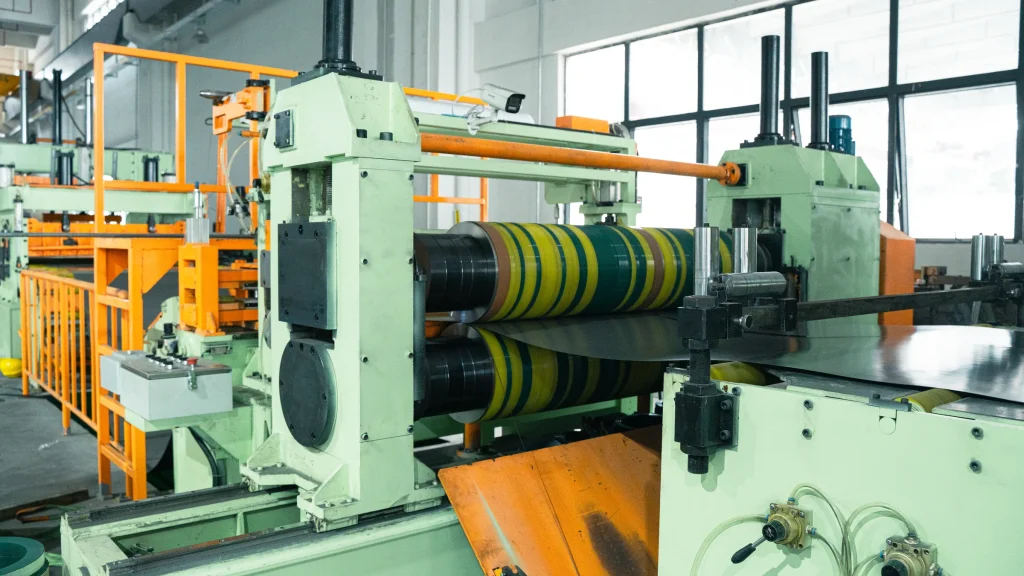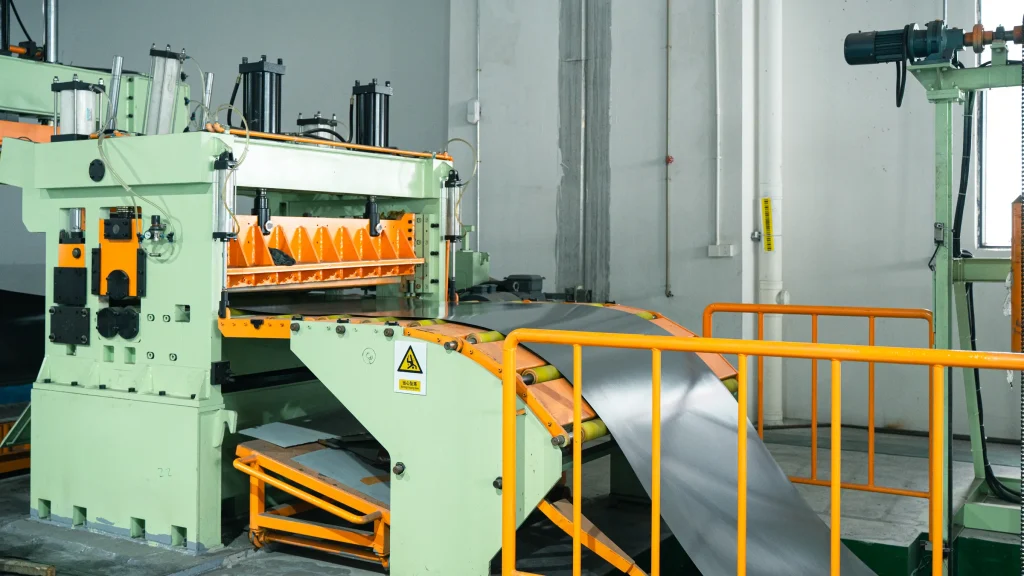
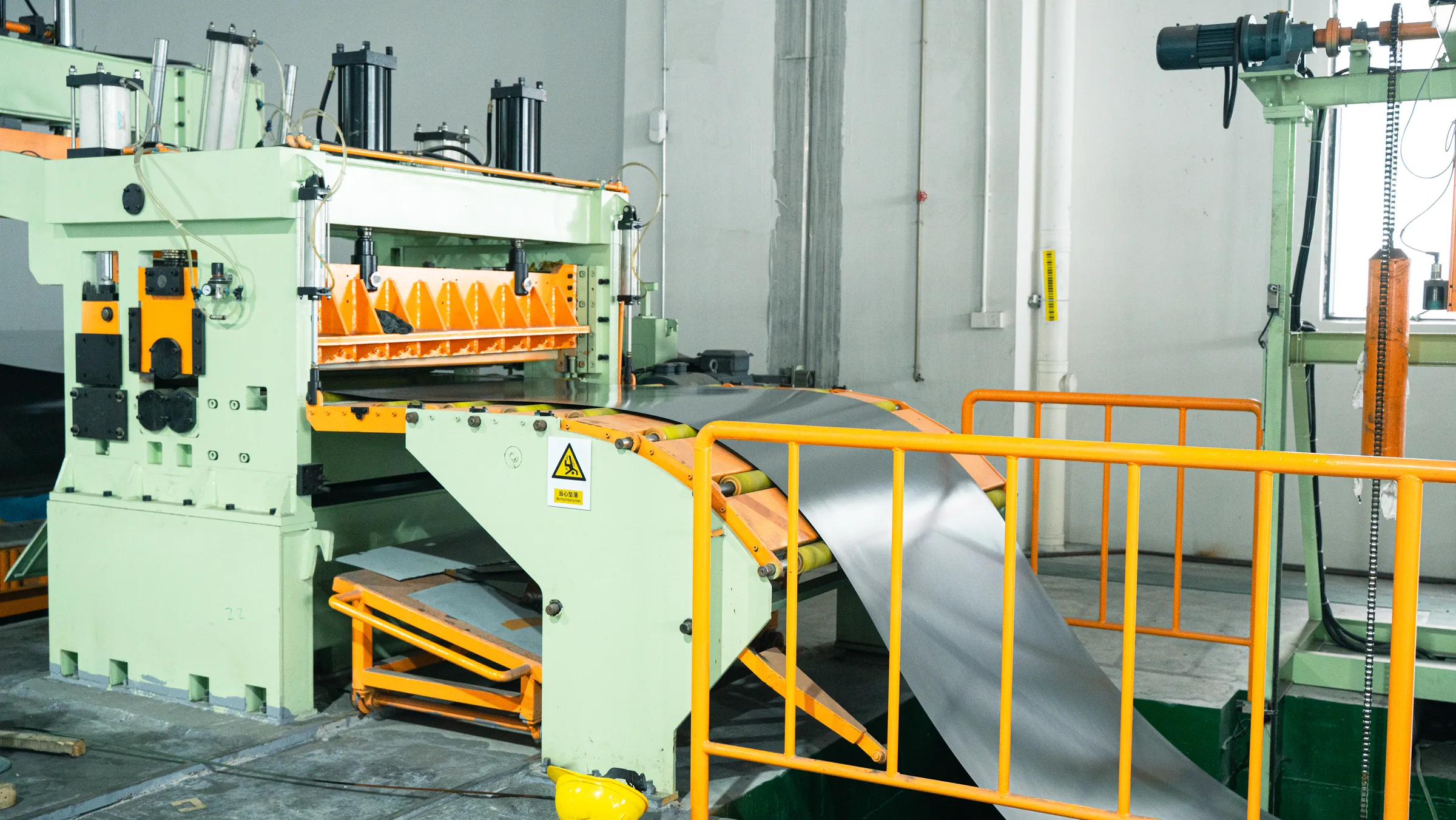
A modern coil slitting line combines mechanical, electrical, hydraulic and pneumatic systems. Pneumatic devices commonly position guides, clamps, pressure rolls and separators. Knowing each device’s function helps diagnose slow movement, unstable force or leakage without changing unrelated production settings.
Flow and pressure devices control motion and force
A speed-control or throttle valve changes airflow to adjust cylinder movement. If an actuator becomes fast, slow or uneven, inspect the setting, tubing and contamination before replacing the cylinder. A damaged valve body or knob can also prevent stable control.

A shuttle valve selects between pressure inputs and sends the effective signal to its outlet, including circuits used for braking or tension-related functions. A pressure-reducing valve establishes controlled pressure for a circuit or branch. Persistent leakage or unstable outlet pressure can indicate diaphragm or sealing damage.
Check each function against the delivered pneumatic diagram. The strip path is easier to interpret after reviewing how a coil slitting line works.
Cylinders and solenoid valves convert commands into movement
A pneumatic cylinder converts pressure into linear motion through its barrel, piston, rod, covers and seals. Common seal profiles include O-, Y- and V-type designs, but replacements must match the cylinder. Reduced force, creeping or air escaping from the opposite port can indicate internal leakage. Qualified personnel should perform leakage tests only after securing the mechanism and controlling stored energy.

A solenoid valve uses an energized coil to move a spool and select airflow. Two-position three-port, two-position five-port and three-position five-port names describe switching positions and flow ports. If a cylinder does not move, confirm pressure, electrical command, coil, connector, override and spool condition before blaming the cylinder.

Air preparation and structured checks prevent repeated faults
An air-preparation assembly typically combines water separation or filtration, pressure regulation and, only where specified, oil-mist lubrication. Drain moisture, inspect the filter and verify regulated pressure before adding oil. Some components require oil-free air, so lubricating every circuit can damage seals or contaminate strip.

Troubleshoot from source to actuator: verify main pressure, water and filters; check regulator output, hoses and fittings; confirm valve switching; then test the cylinder. Record the correction in the preventive maintenance system so recurring pressure loss can be traced. RONGXING can support review within the agreed service scope. For machine-specific help, send the line model, pneumatic diagram and observed fault.