
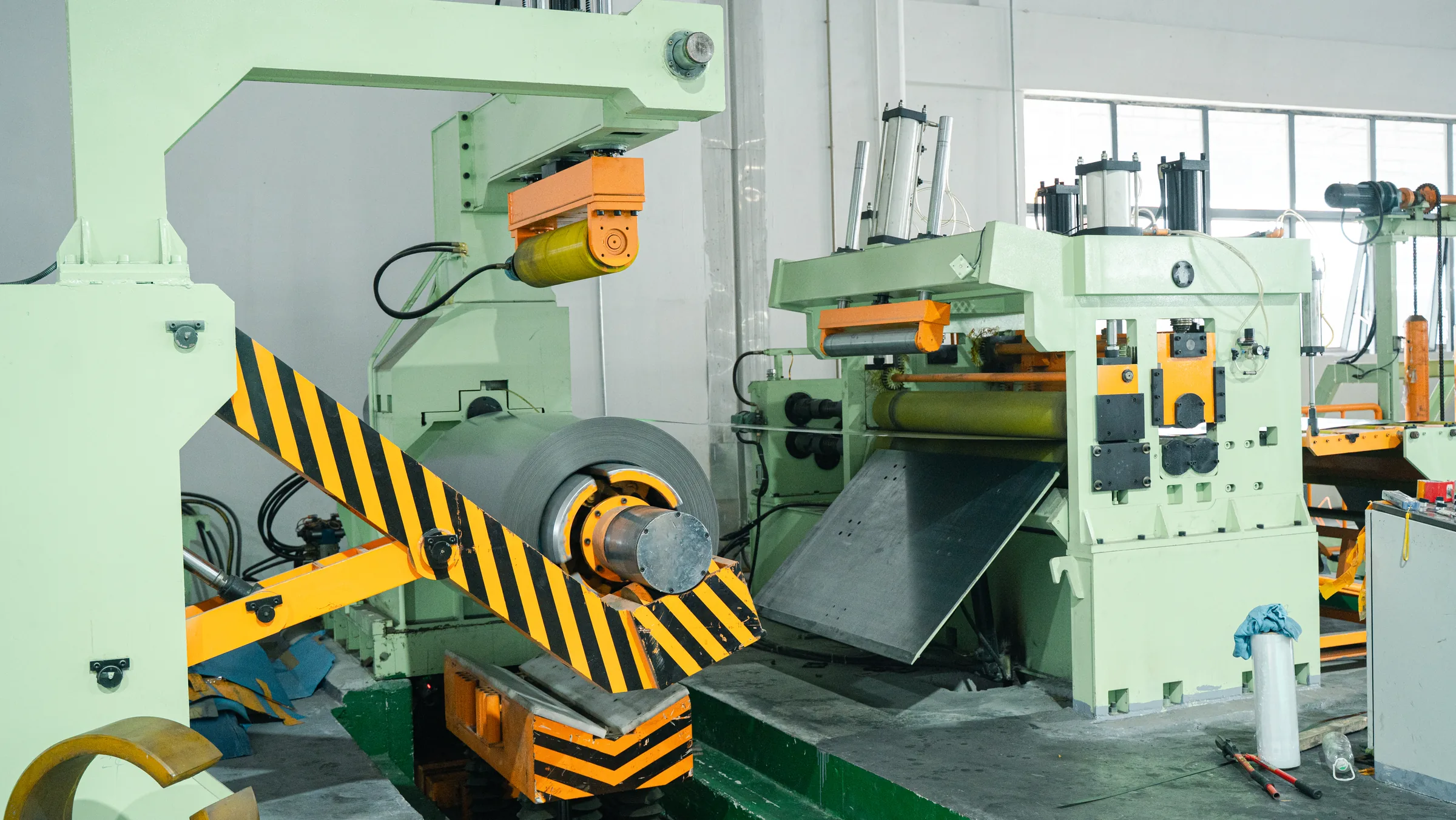
Lubrication on a coil slitting line protects moving surfaces, but more grease is not automatically better. Lubricant, quantity and interval depend on the manual, component specification, operating hours, load and workshop conditions. A planned route is more reliable than waiting for noise, heat or unstable motion.
Prepare the line before adding oil or grease
Stop the line under the approved lockout procedure, release stored pressure where required and prevent material movement. Clean every grease nipple and oil port before opening it. Contamination pushed into a bearing can cause damage, while excess lubricant near knives, brakes or strip-contact areas can reach the material.

The lubrication map should state grade, point, quantity, method and interval. Do not mix incompatible greases. How Does a Coil Slitting Line Work? helps maintenance teams trace the shafts, rollers and moving assemblies at each stage.
Eight points need a defined lubrication route
The archived RONGXING checklist highlights eight areas. First, lubricate line rollers and specified bearings. Second, service upper- and lower-knife mechanisms at the manual’s points, keeping grease away from cutting edges and strip. Third, lubricate the lower-knife clutch or associated transmission where fitted. Fourth, grease toothless screw drives, transmission shafts and lateral-adjustment mechanisms, then move them through their approved travel.

Fifth, clean cylinder rods, seals and pivots before using only their specified lubricant. Sixth, service sliding bearings and uncoiler moving points. Seventh, clean and grease designated uncoiler mandrel or pressure-plate injection points. Eighth, lubricate brake linkages only at approved pivots, cycle the linkage and keep friction surfaces clean.

The old checklist used up to three applications per week for several rollers, knife mechanisms, screw drives and brake linkages, and about every three days for sliding bearings and uncoiler points. These are historical references, not universal instructions. Follow the delivered manual and adjust only from operating hours and inspection evidence.
Verify the result and keep a maintenance record
After service, remove excess grease and tools, restore guards and test the mechanism under the approved condition. Check for leakage, heat, noise, drag, unstable tension or lubricant reaching the strip. A point that repeatedly runs dry needs investigation, not just a shorter interval.

Record the date, operating hours, lubricant, quantity and findings. This supports the wider coil slitting line maintenance rules. RONGXING can review troubleshooting within the agreed service scope. Before changing a lubricant or interval, send the machine configuration and maintenance question.