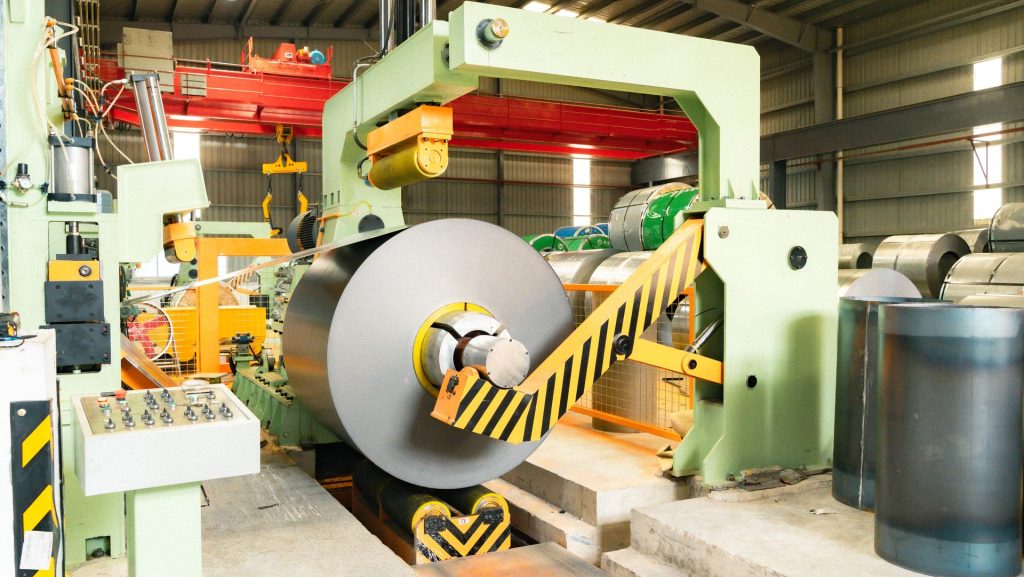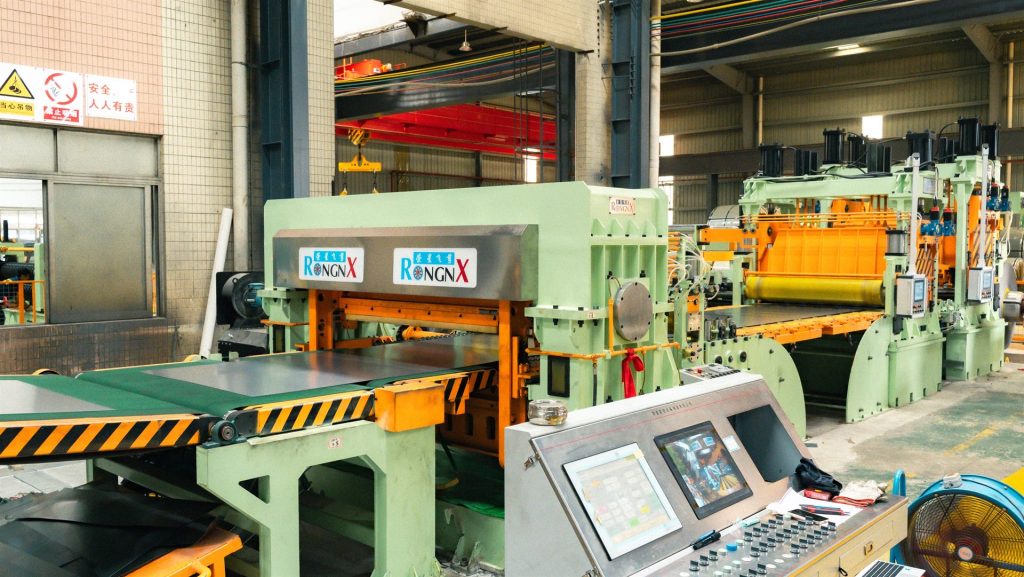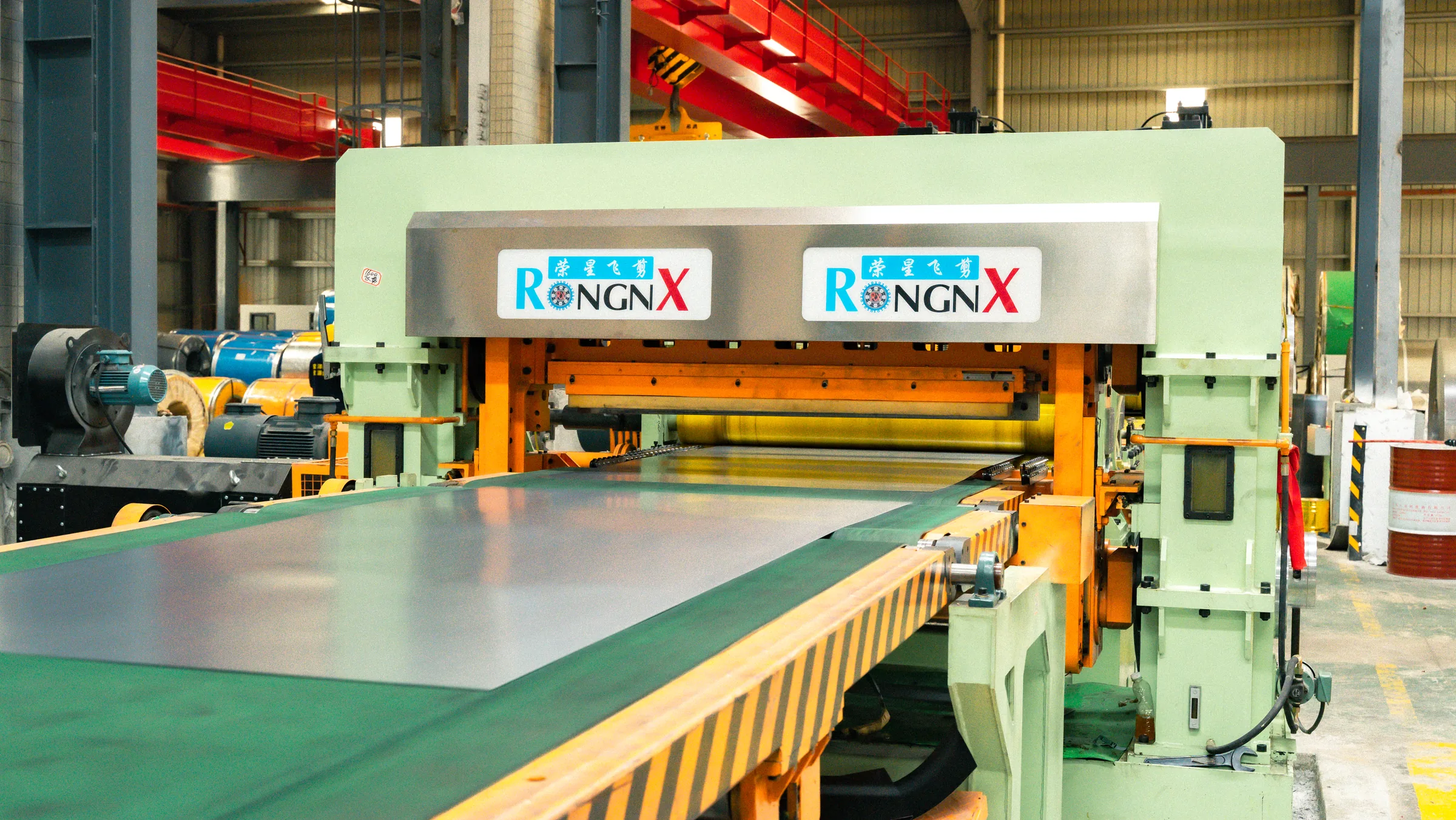
At 100 m/min, strip travels about 1.67 metres every second. The figure is useful only when the complete Flying Shear cut-to-length line can measure, accelerate, cut, discharge and stack stably. Current RONGXING reference configurations list up to 100 m/min for applicable 850mm and 1350mm models; actual speed still depends on material, thickness, blank length and stacking.
The motor, controller and shear form one motion system
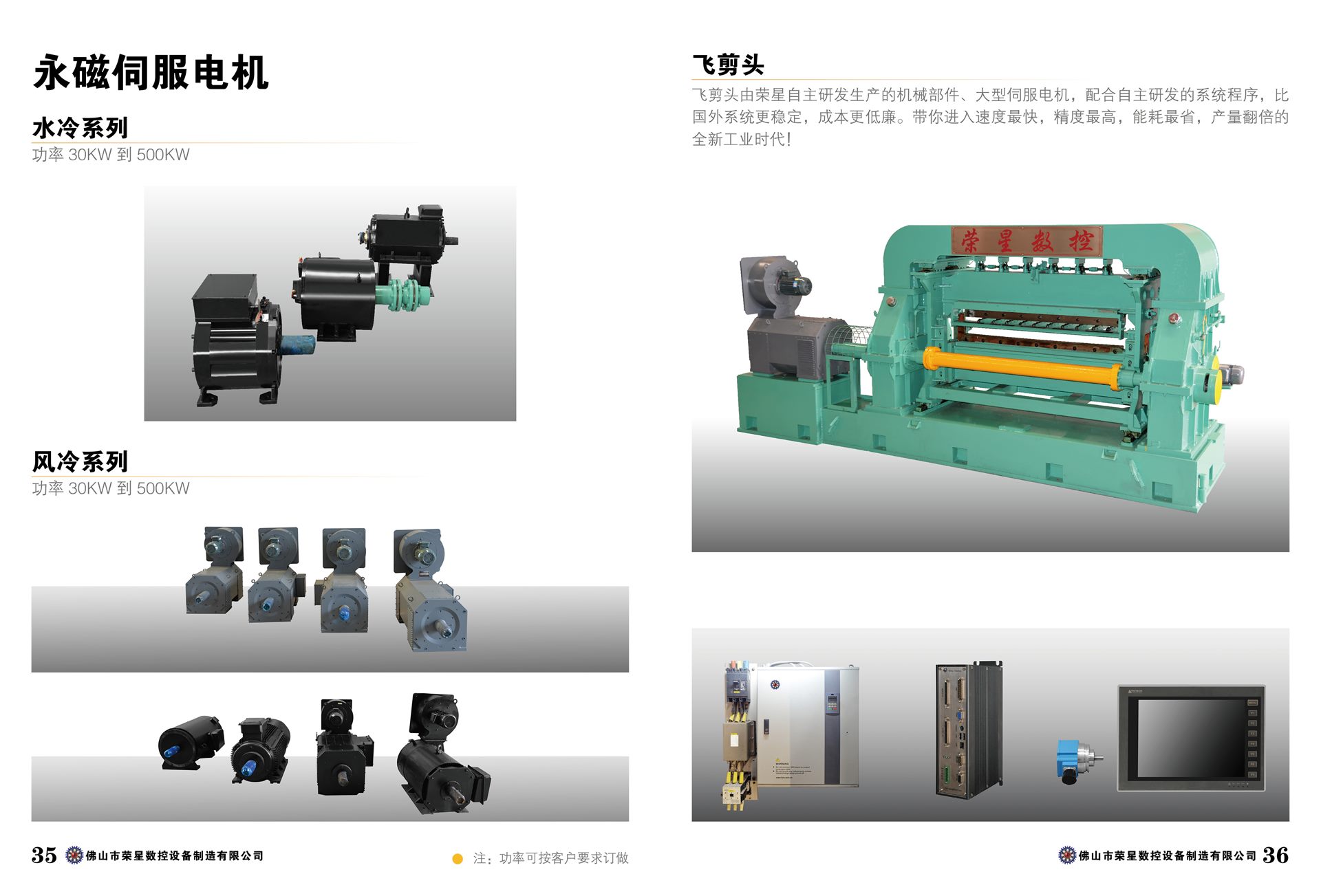
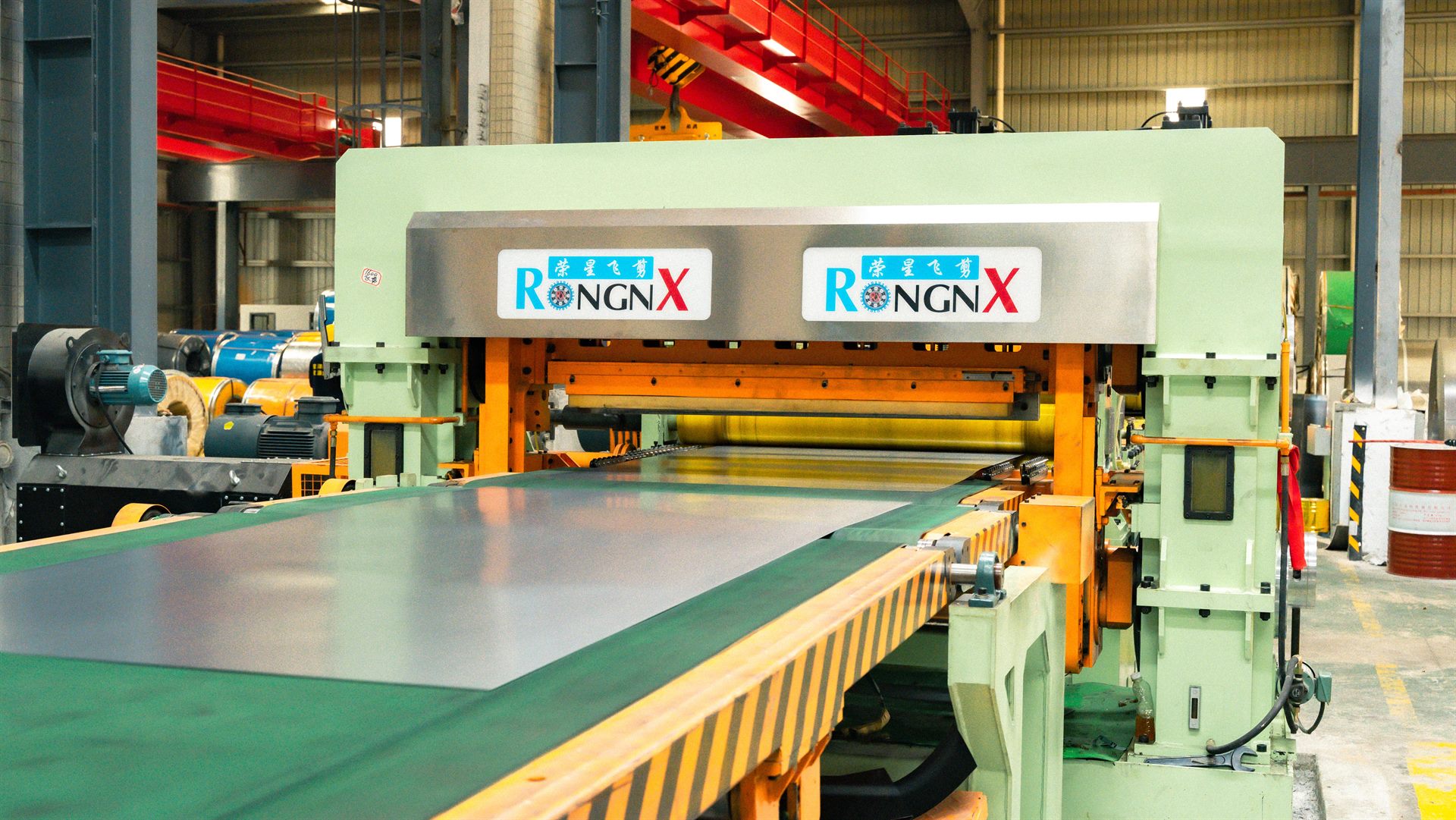
RONGXING develops its permanent-magnet servo motor, control logic and flying-shear head as a coordinated package. The motor must repeat the commanded motion, the controller must convert length and speed signals into a motion profile, and the head must execute it with suitable stiffness, clearance and blade condition. A fast motor cannot compensate for delayed measurement, mechanical play or unstable strip travel.
This system view applies to both the 850mm Flying Shear line and 1350mm Flying Shear line. Motor size, cooling and motion settings remain project decisions.
Synchronization protects the cut at speed
During a flying cut, the blade mechanism must reach the required relationship with the moving strip. The controller uses measured length and speed to schedule the motion, then returns the mechanism for the next cycle. Short blanks can require a different acceleration profile from long blanks at the same line speed.
RONGXING’s guide to flying-shear synchronization and cut accuracy describes the interaction between measurement, strip speed and cutter motion. At higher speed, timing error has less time to be corrected, so signal quality, response, mechanical condition and material travel must be assessed together.
Maximum speed must be an acceptance condition
A professional test checks more than speed: repeated length, diagonal and edge condition, flatness, surface handling, discharge, stack quality and system behaviour. It should use representative material and blank lengths because one light test coil or long sheet does not prove every recipe.
The right question is therefore not only “Can the line reach 100 m/min?” but “Under which approved recipe can it produce acceptable sheets consistently?” To define that boundary for a new project, send RONGXING the coil, blank and output requirements before the drive and shear configuration is finalized.