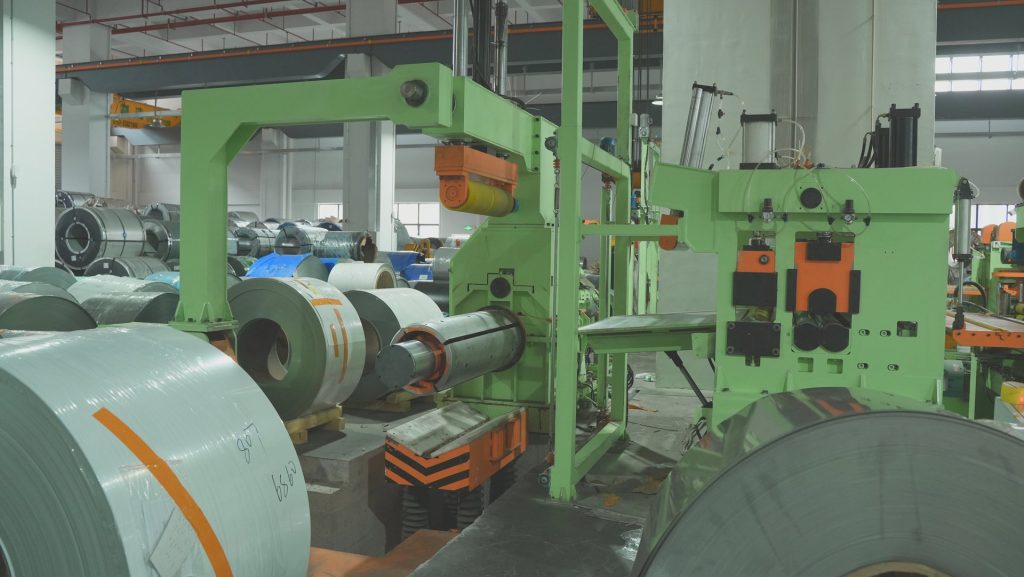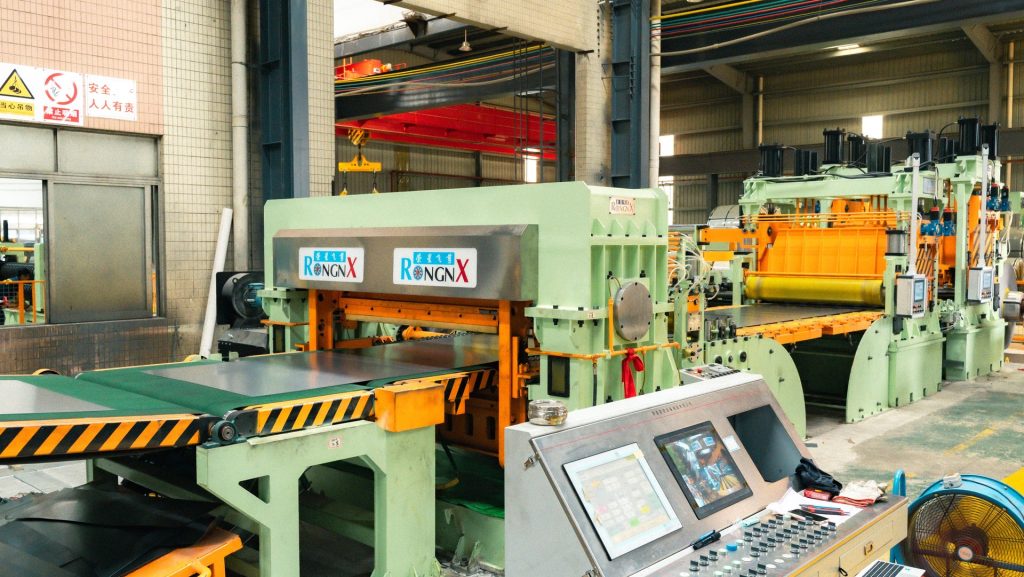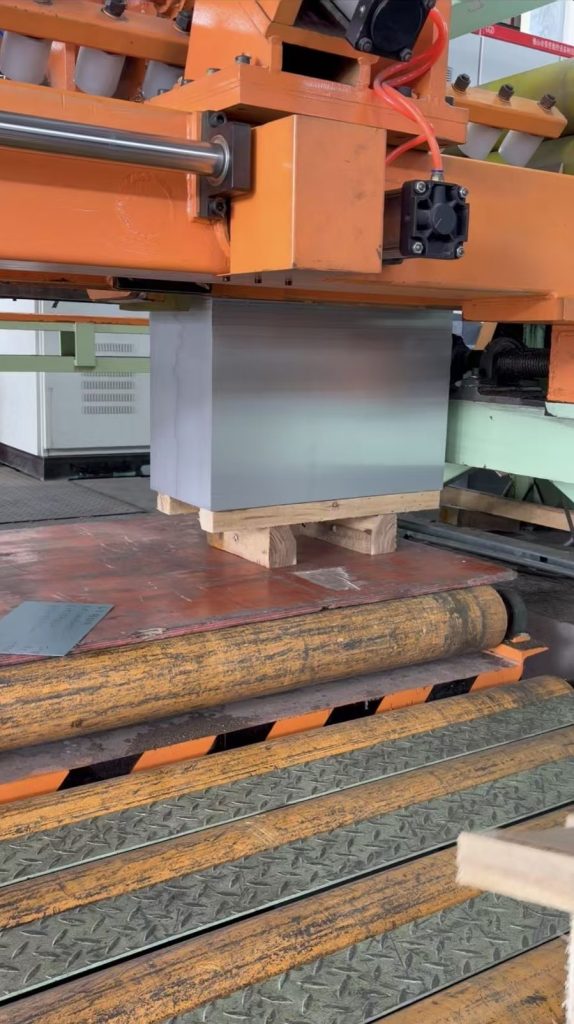
A flying shear cut-to-length line can hold the required length and still produce an unacceptable order if visible surfaces are scratched, dented or contaminated. Stainless steel, aluminum and coated sheet require a contact-control plan from coil loading through guiding, leveling, conveying and stacking, followed by packaging that protects the finished bundles during internal handling.
Control every contact point before cutting
The first inspection should identify which side is cosmetic, whether protective film is present and what defects are unacceptable. Rollers, guides, belts and tables must be clean, smooth and appropriate for the surface. A small trapped chip can repeat the same mark across many sheets, while poor centering can rub an edge continuously. Cleaning and inspection intervals should therefore be part of the production recipe, not left until damage becomes visible.
The 850mm Flying Shear line lists stainless, coated steel and aluminum among configurable materials, but the actual roll finish, guide contact and handling method must still be confirmed for the customer’s surface requirement.
Convey and stack without creating new defects
After cutting, the sheet changes from a continuous strip into an individual blank. Transfer speed, belt condition, sheet separation and braking must keep the blank supported and prevent uncontrolled sliding. At the stacker, drop height, side alignment and pile movement should be tuned to the sheet size and stiffness. Interleaving, film or other separators may be required where metal-to-metal contact is not acceptable.
These details matter because precision-cut blanks often feed visible products. The automotive discussion in From Precision-Cut Sheet to Vehicle Body shows why flatness and surface quality affect downstream forming. The same principle applies to exposed kitchen products, as explained in From Stainless Sheet to Kitchenware.
Protect the finished bundle and preserve traceability
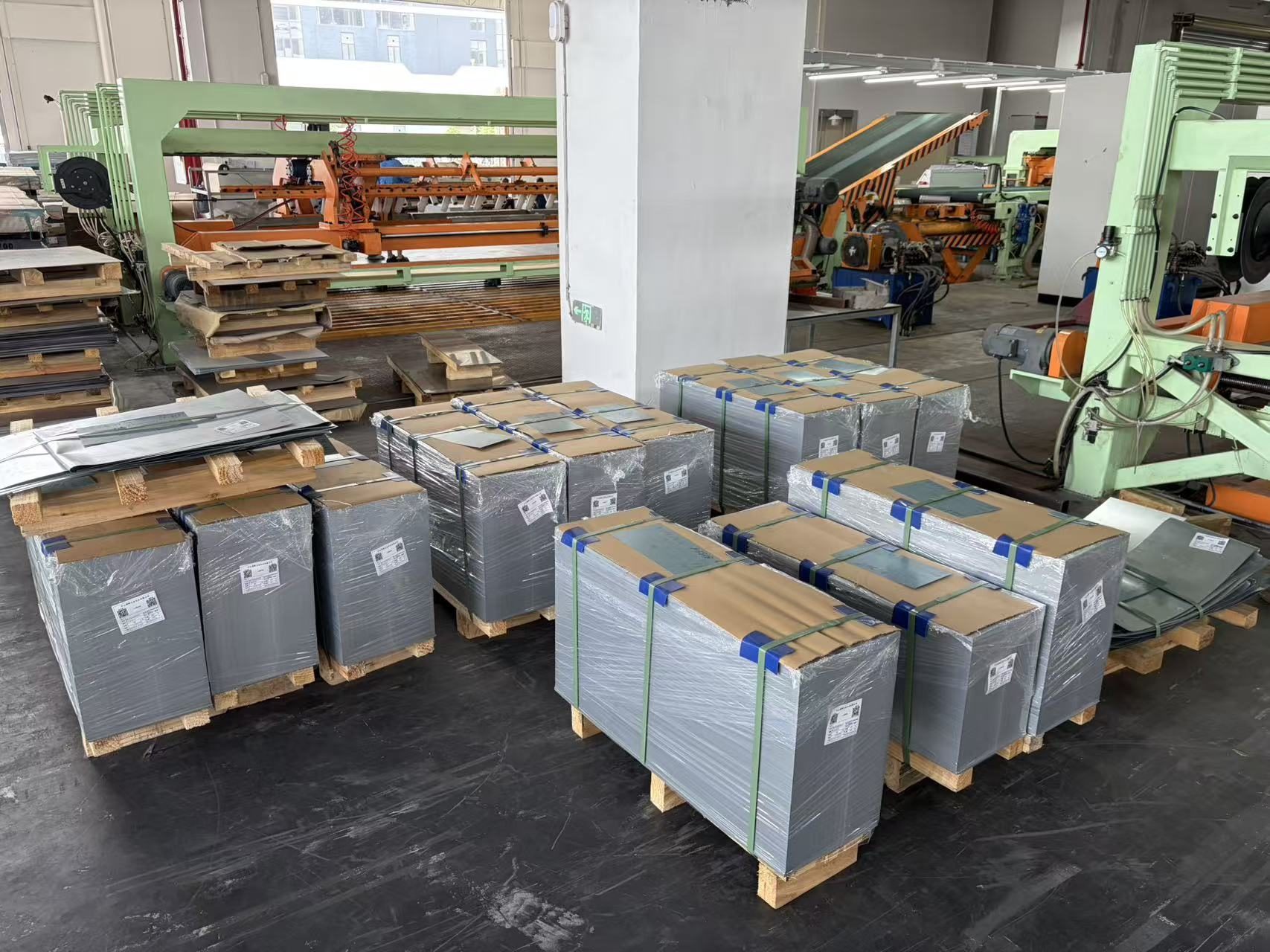
Packaging should support the sheet without concentrating load on vulnerable edges. Corner protection, suitable skids, wrapping and secure banding help control movement, while labels preserve material, size, quantity and batch identity. The method should match bundle weight, storage time and the next handling step.
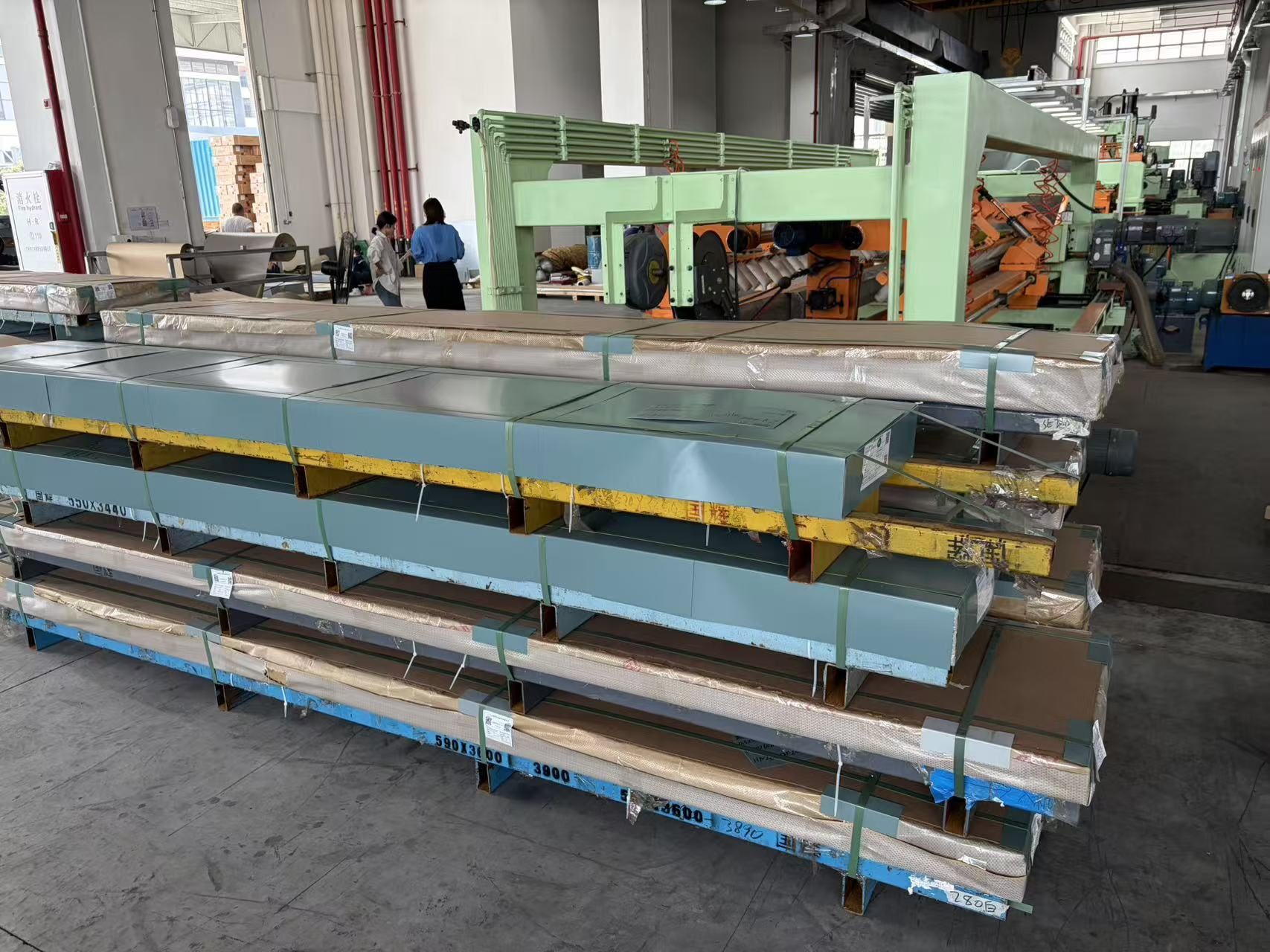
For project review, send RONGXING the material, coating or finish, protective-film details and permitted surface standard. That information allows the contact surfaces and stacking method to be evaluated before the final line configuration is fixed.