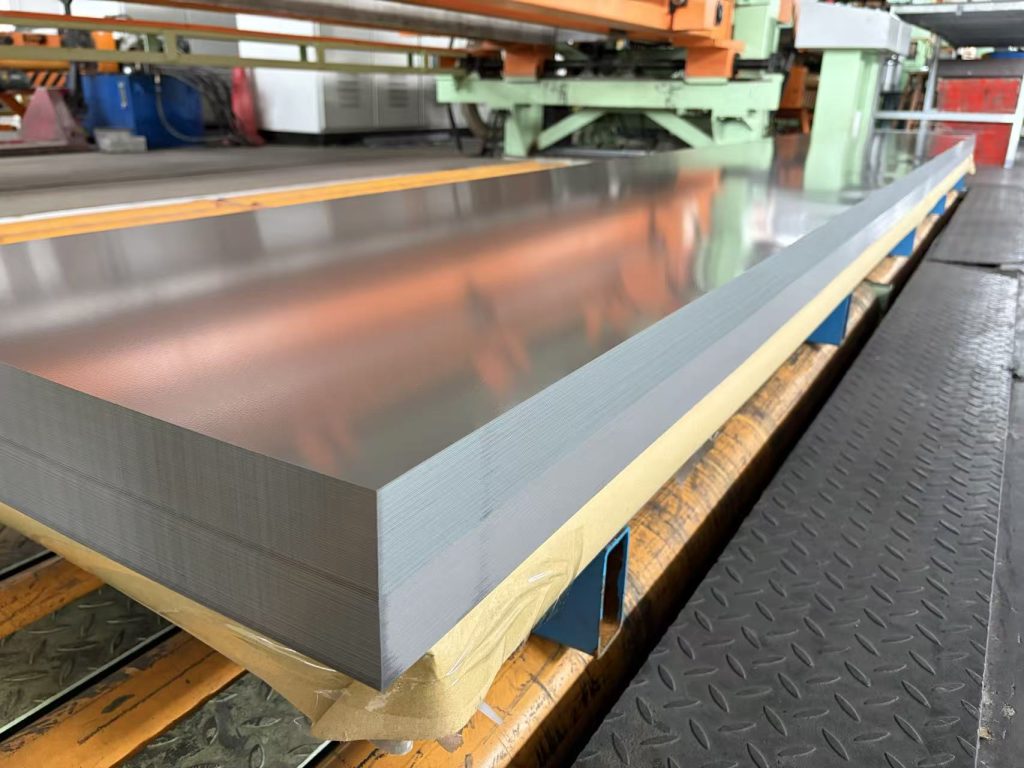
Stainless steel surrounds everyday life in cookware, sinks, worktops and appliance panels. Before these products are drawn, bent, welded or polished, a coil cut-to-length process often converts the coil into manageable sheets. Dimensional consistency and careful handling already influence downstream efficiency and appearance.
A finished kitchen product starts with the blank
A cookware body may be deep drawn; a sink may be formed from one sheet or several pieces; an appliance housing may be blanked, bent and joined. Each route needs a suitable grade and forming process, but all benefit from controlled length, squareness and flatness for reliable nesting, tooling location and transfer.
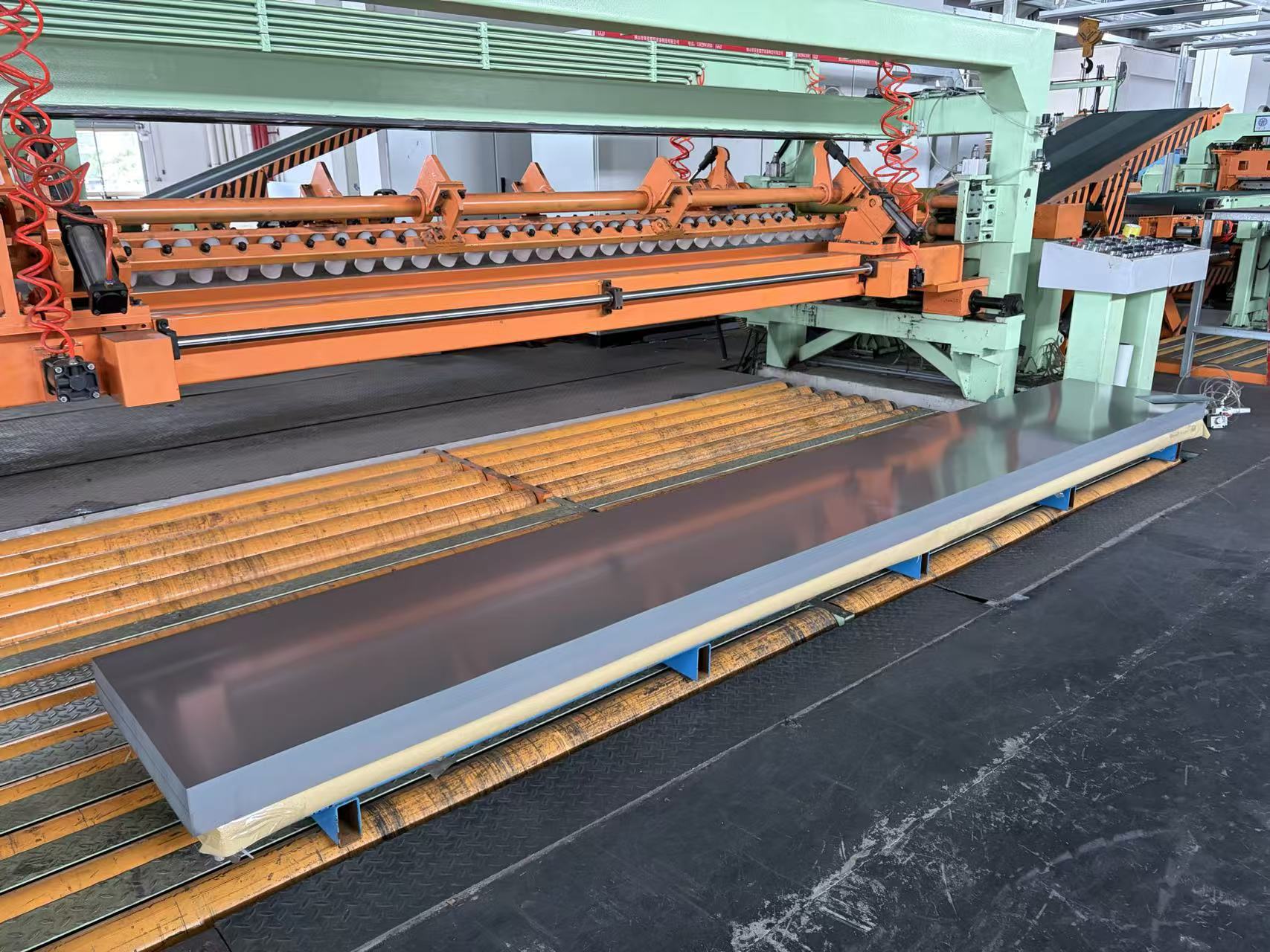
On a configured 1350mm Flying Shear line, levelling, measurement, moving cutting, conveying and stacking operate as one flow. The aim is repeatable blanks ready for the next manufacturing stage, not merely a fast cut.
Surface quality is part of usable yield
Kitchen and appliance products often retain visible stainless surfaces, so scratches introduced during discharge or stacking may remain noticeable. Roller condition, guide contact, belt cleanliness, transfer height and stack alignment all matter. Sensitive finishes may also require suitable film, non-marking contacts or separators.
Good geometry reduces downstream correction. A flat sheet that enters tooling consistently is easier to position for blanking, bending or forming. The working principle of a Flying Shear shows why levelling, measurement and continuous cutting should be considered together.

Specify the downstream requirement first
Line selection should begin with the finished-product route: material grade, thickness, width, blank range, finish, allowable marks, flatness, stack format and output. Actual coil samples are more useful than a generic “stainless steel” description because finishes and forming behaviour vary.
RONGXING’s service and commissioning work can use those requirements to define an appropriate handling and acceptance plan. If the intended output is cookware, sinks, cabinets or appliance panels, share the material and blank specification so the line can be discussed around the real downstream process.