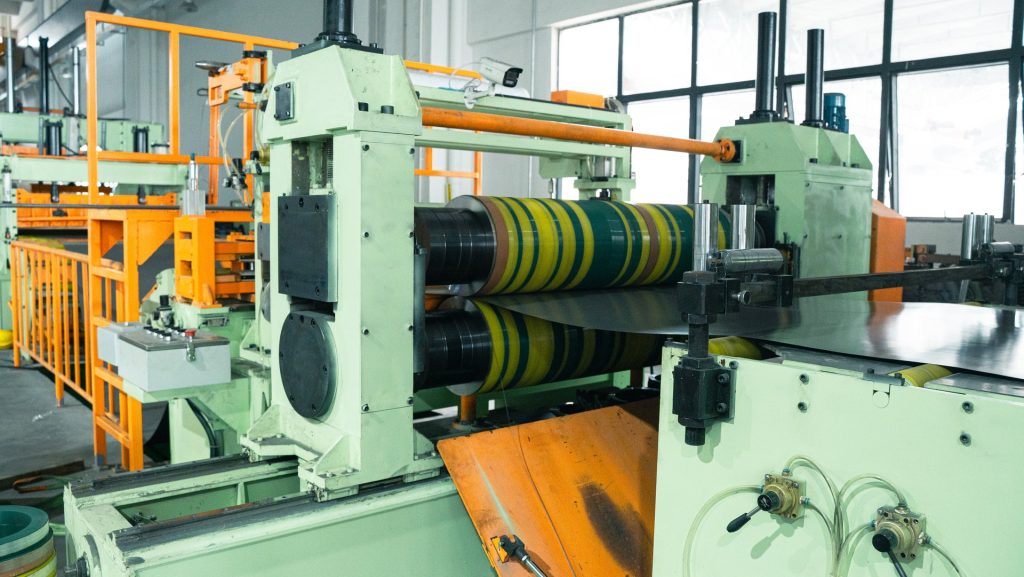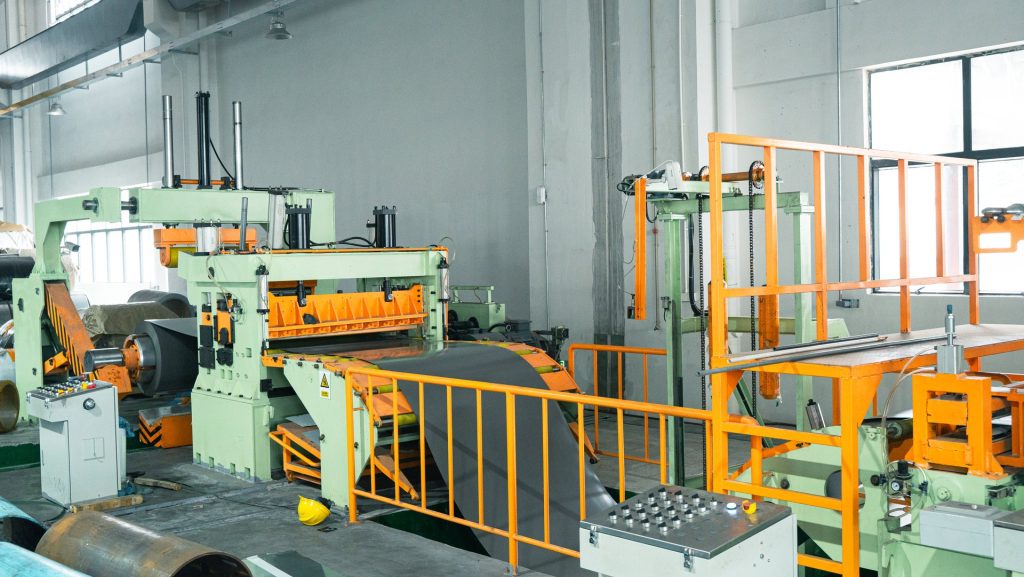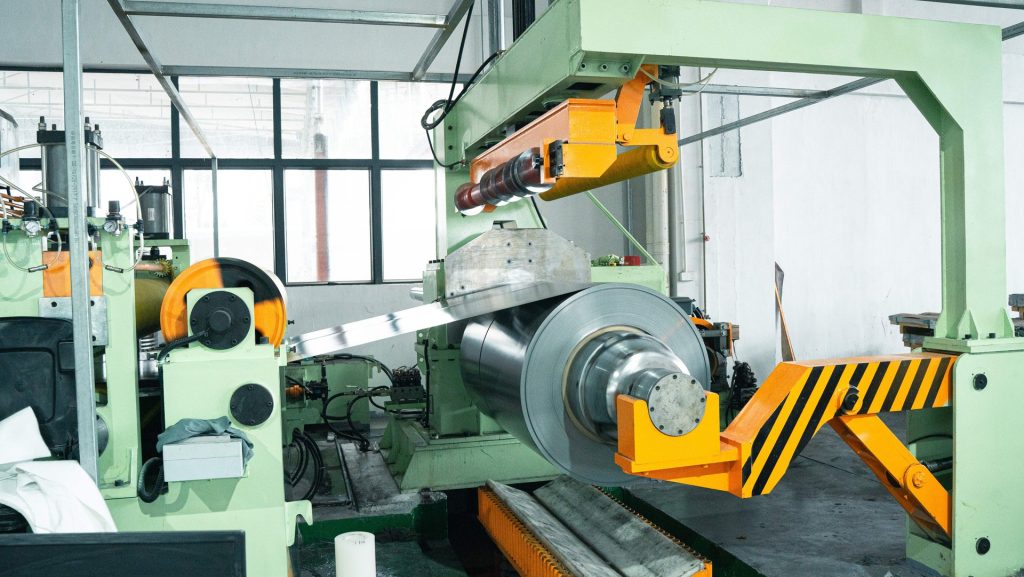
Strip edge trimming removes the outer portions of a master coil so the usable material enters the finished-strip plan with controlled edges. The decision affects width allocation, yield, knife setup, strip tracking, scrap equipment and uptime. Unstable edge scrap can interrupt production even when the main strips are cut correctly.
On a coil slitting line, edge trim should be planned together with the complete strip arrangement. The buyer, production planner and machine supplier need to understand the incoming edge condition, the required finished widths and how the removed material will be separated, controlled and discharged safely.
Edge trim begins with the incoming coil condition
Master-coil edges may contain damage or irregular shape that should not enter a finished coil. The amount removed should reflect the incoming material and product requirement. One fixed trim assumption can waste material on one job and miss a defective zone on another.
Before setup, inspect both master-coil edges and record telescoping, dents, waviness, corrosion, coating damage or other visible conditions. Confirm the total available width and compare it with the finished-strip widths, internal slitting losses and planned trim. The strip plan should balance the product requirement with realistic process margins rather than treating the leftover width as an afterthought.
Yield must be calculated from saleable output, not only from the number of strips. The existing RONGXING article on material utilization in coil-fed production explains how parent width, layout and process loss should be evaluated together. A narrower trim is not automatically better if it produces unstable scrap or leaves an unacceptable edge on the finished strip.
Knife setup must create stable product and stable scrap
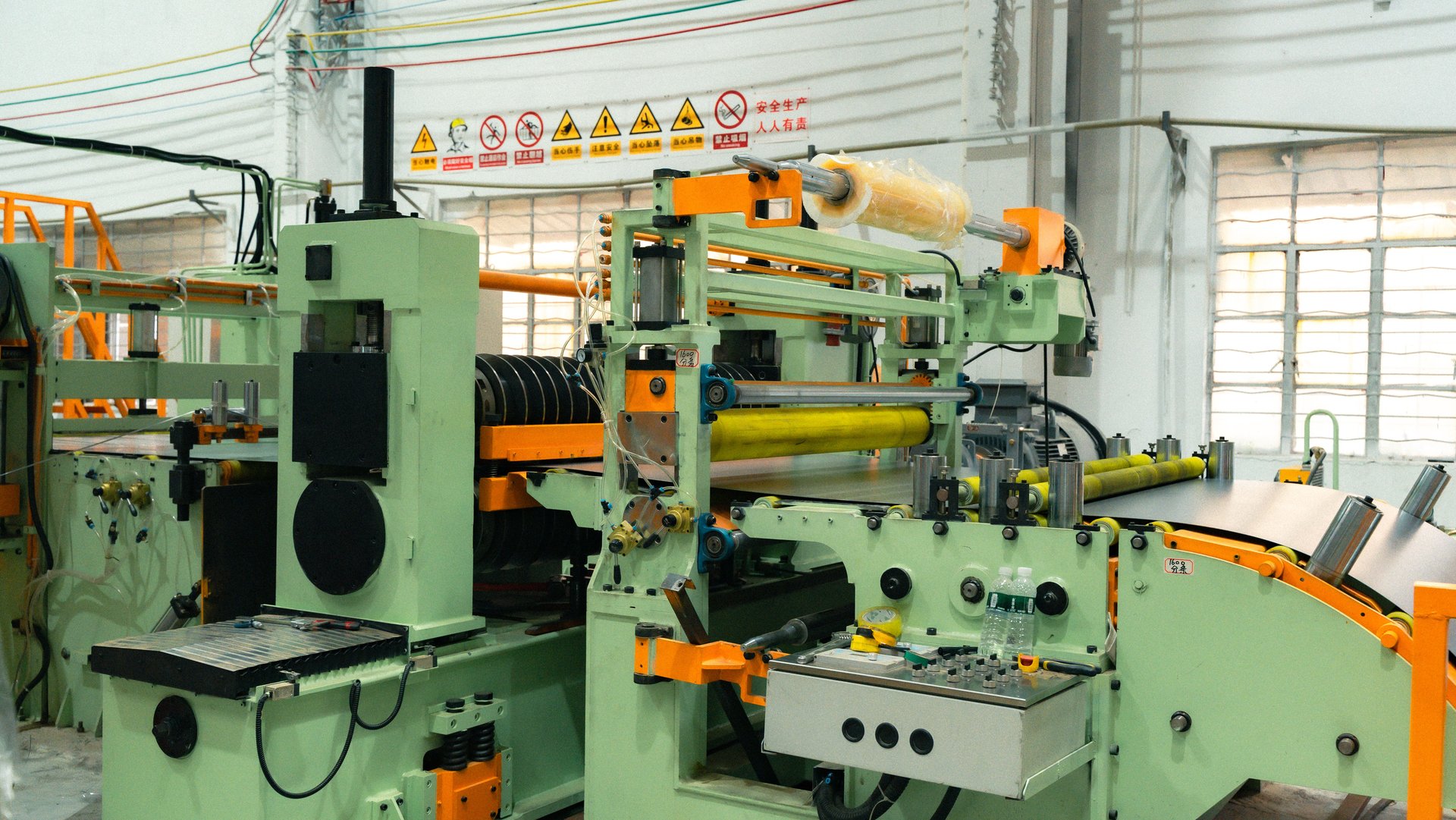
The edge-trim knives use the same tooling system as the product knives. Their clearance, overlap, condition and position must suit the material and thickness. Trim must also remain stable for the selected scrap method, especially during threading and acceleration.
The operator should verify the complete tooling sequence from the fixed reference side. Check knife and spacer cleanliness, total assembled width, upper/lower relationships and the planned trim on both sides. During the trial cut, inspect the finished product edge and the scrap edge. An unstable trim can indicate a local tooling, guidance or incoming-material problem.
The strip should approach the knife stand on a controlled centerline. If the master coil moves laterally, the trim width can change even when the knives remain fixed. That movement may alternate between insufficient trimming and unnecessary yield loss. Entry guides should stabilize the strip without forcing or marking it.
The process overview in How Does a Coil Slitting Line Work? helps place edge trimming between entry control, the slitter head and downstream strip separation.
Scrap must leave the cutting area without disturbing the strips
Once separated, the edge scrap needs a dedicated path. It should not rub against finished strips, wrap around nearby rolls or accumulate close to rotating tooling. The discharge path must account for strip direction, line speed, material stiffness and the changing condition of the scrap as the master coil runs.
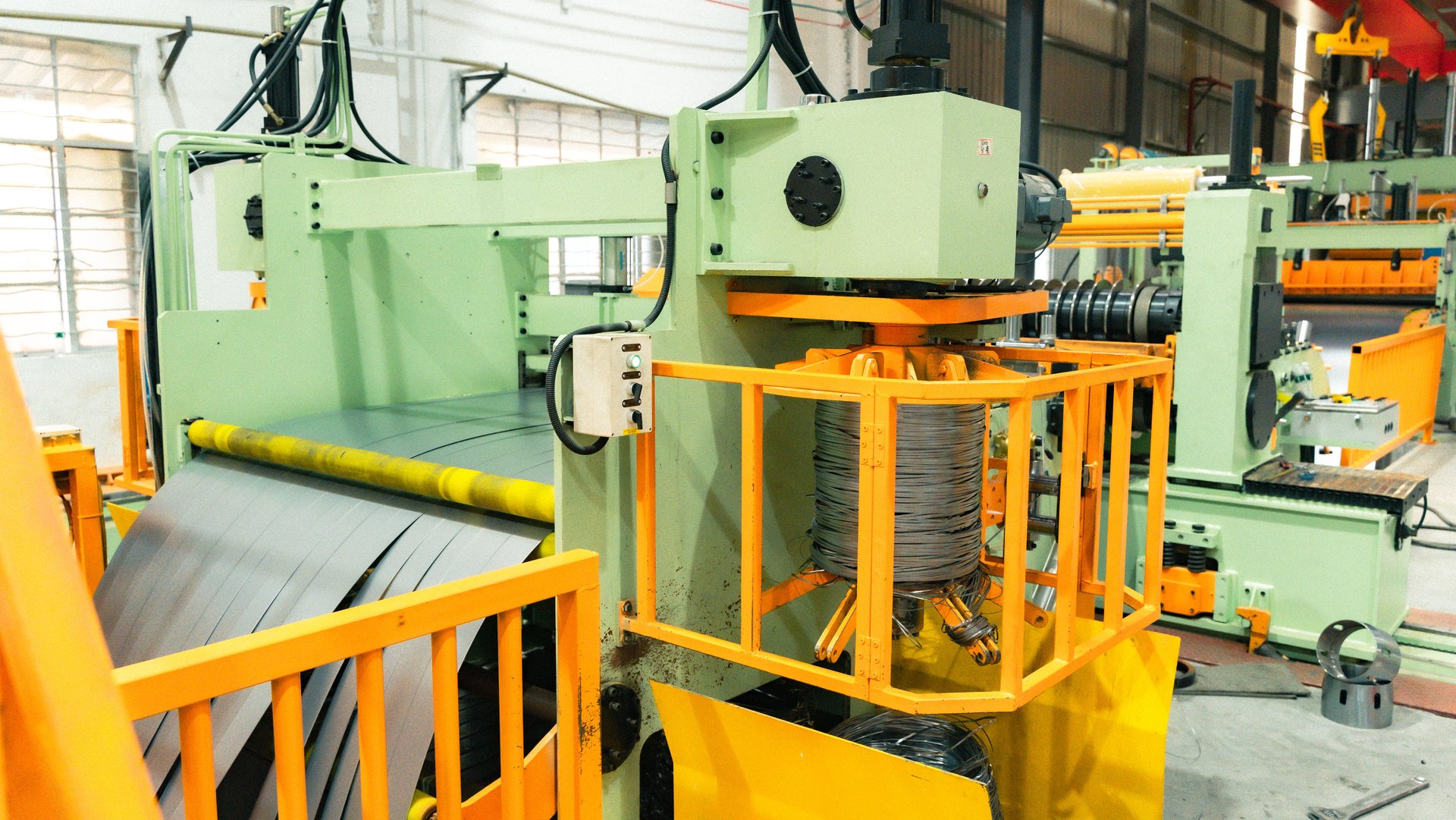
A scrap winder collects the continuous edge strip into a controlled coil or bundle. Its position, guiding and drive behavior must match the real scrap stream. If take-up is too weak, scrap can become loose or wander. If it pulls improperly, it can disturb the trim path near the knives. The useful control condition depends on the scrap width, thickness, material and operating speed.
Some materials may require another scrap method. The RFQ should state the expected trim range and disposal workflow, while the quotation should identify the included equipment and its limits.
Diagnose scrap faults by their first point of instability
When edge scrap breaks, tangles or winds poorly, first identify where the instability begins. A break directly after cutting suggests a different group of causes from a strip that separates correctly and later loses control at the winder. Preserve the material, operating condition and break location before changing several settings.
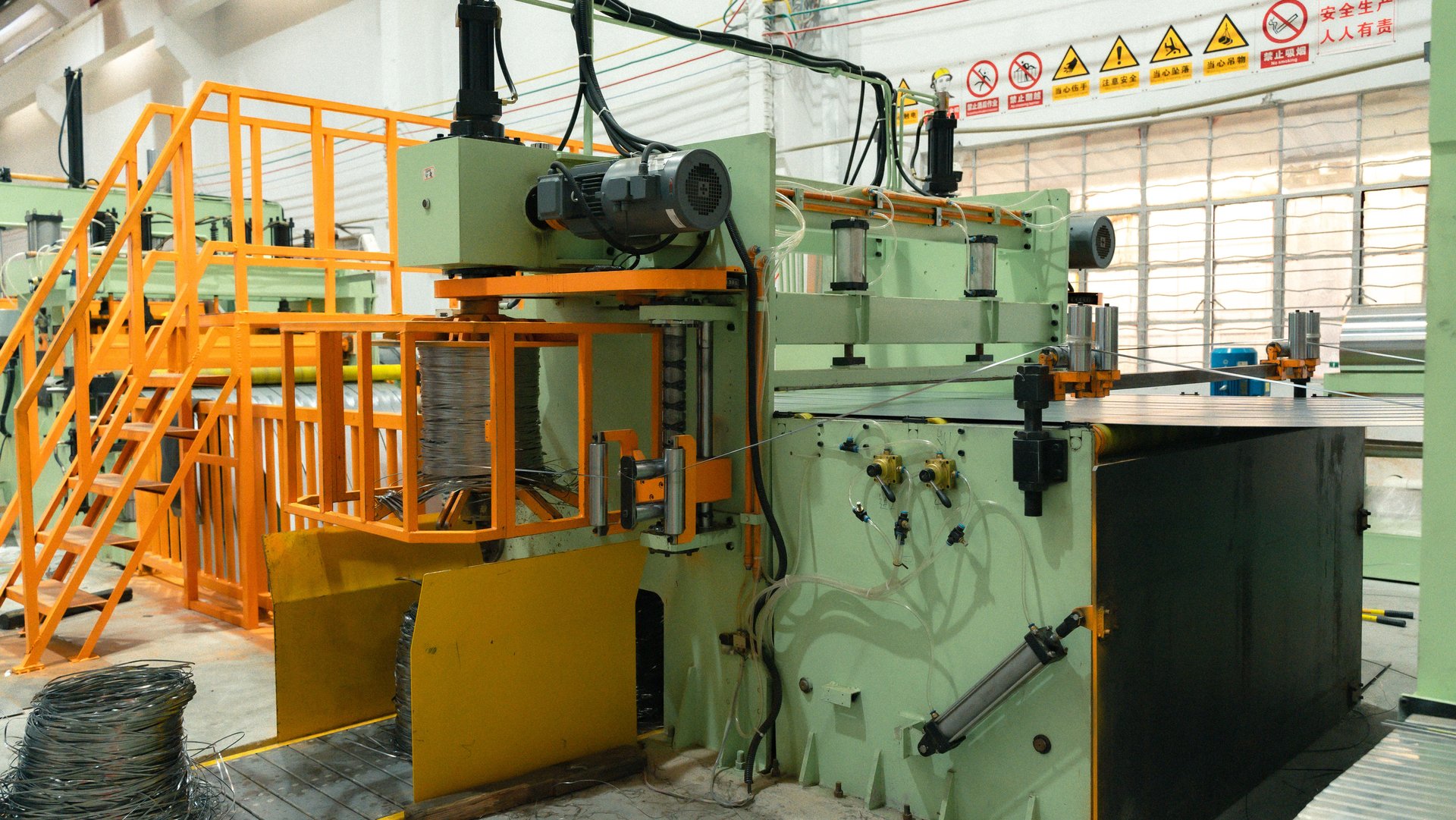
Inspect the incoming edge for damage or thickness variation. Check trim width, knife condition and the consistency of the cut. Observe guides, contact points and the route to the scrap unit. Compare the drive and operator adjustments with the moment the problem occurred. If one side is stable and the other is not, compare their tooling, edge condition, trim width and mechanical path rather than making only a general machine adjustment.
Do not use an excessive pulling force to hide an unstable cut or poor guide alignment. A short-term improvement at the scrap winder can increase stress at the knife stand or create an unsafe failure. Correct the earliest verified cause, then repeat a controlled run and inspect both finished edges.
Scrap handling is also a safety and maintenance subject
Freshly slit scrap can have sharp edges and unpredictable stored energy. Operators should not guide, pull or untangle moving scrap by hand. Guards, safe threading tools, emergency stops, lockout procedures and the approved operating method must cover the cutting and scrap areas. Any access required for clearing a fault should occur only under the site’s authorized isolation procedure.
Routine inspection should cover guides, the winding unit, drive components, fasteners, sensors and guarding. Remove accumulated material before it interferes with moving parts. Record repeated breaks, vibration and changes in scrap-coil shape.
The RONGXING service page provides a starting point for maintenance, commissioning and operator-support discussions. Site-specific safety assessment and training remain necessary for the final installation.
Include trim and scrap data in the RFQ and acceptance test
A complete slitting-line RFQ should include expected master-coil edge condition, normal and minimum trim widths, material and thickness range, maximum operating requirement, preferred scrap form and workshop handling method. If scrap will be moved by crane, forklift or manual container, describe that workflow and the available space.
During factory acceptance, run a representative strip plan with realistic edge trim. Verify that scrap separates consistently, follows the intended path and can be removed without disturbing finished strips. Inspect product edges, strip widths, surface condition and winding quality at the same time. The purpose is not to demonstrate scrap removal alone, but to confirm that product quality and waste handling remain stable together.
Edge trimming should also be reviewed economically. The best result balances saleable width, reliable processing and the cost of interruptions or rejected material. When requesting a quotation, provide the full width calculation and photographs or descriptions of typical incoming edges. Buyers can send RONGXING the coil and strip plan for a project-specific equipment review.