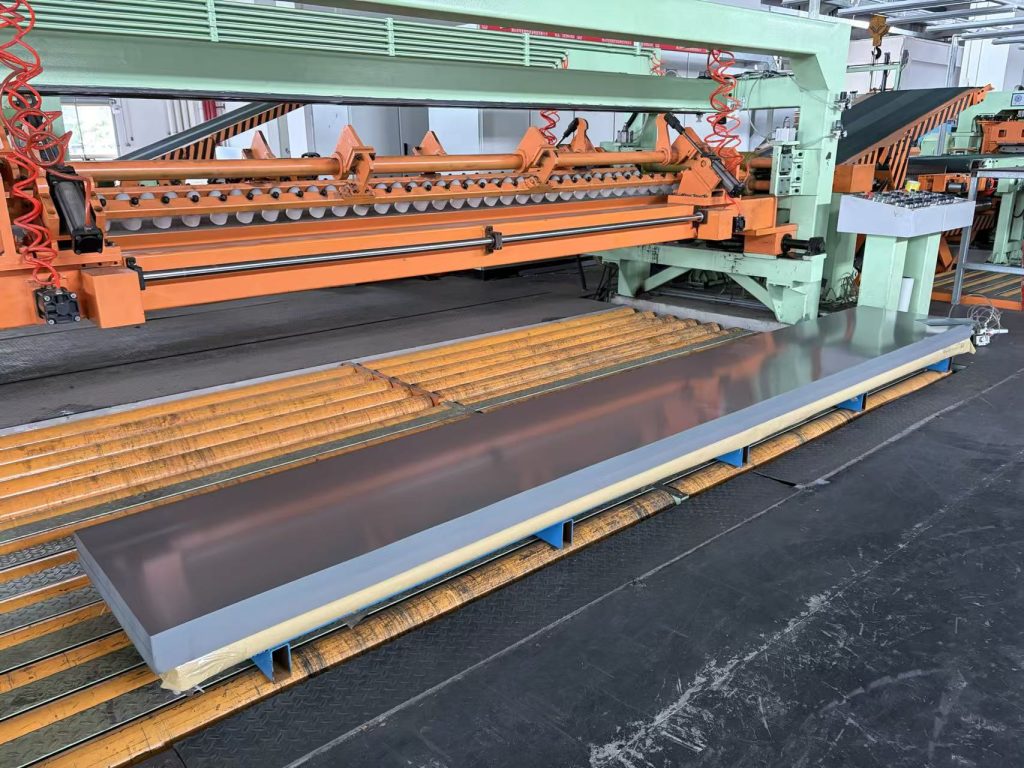
A finished vehicle may look far removed from a steel coil, but many visible and structural parts begin as sheet metal that must first be levelled, measured and cut into controlled blanks. A Flying Shear cut-to-length line prepares them for stamping, forming, joining and assembly. It does not replace the forming press; it supplies repeatable blank geometry and surface condition for the next process.
The vehicle panel begins before the press
Coil loading establishes steady strip travel. Levelling reduces coil set before the measuring system defines the target length. In a suitable 850mm Flying Shear configuration, the shear follows the moving strip during the cut, allowing continuous feeding.
The important result is not simply a separated sheet. The blank needs controlled length, diagonal condition, flatness and an undamaged working surface so it can locate consistently in dies and automated handling systems.
Small upstream variation becomes a downstream problem
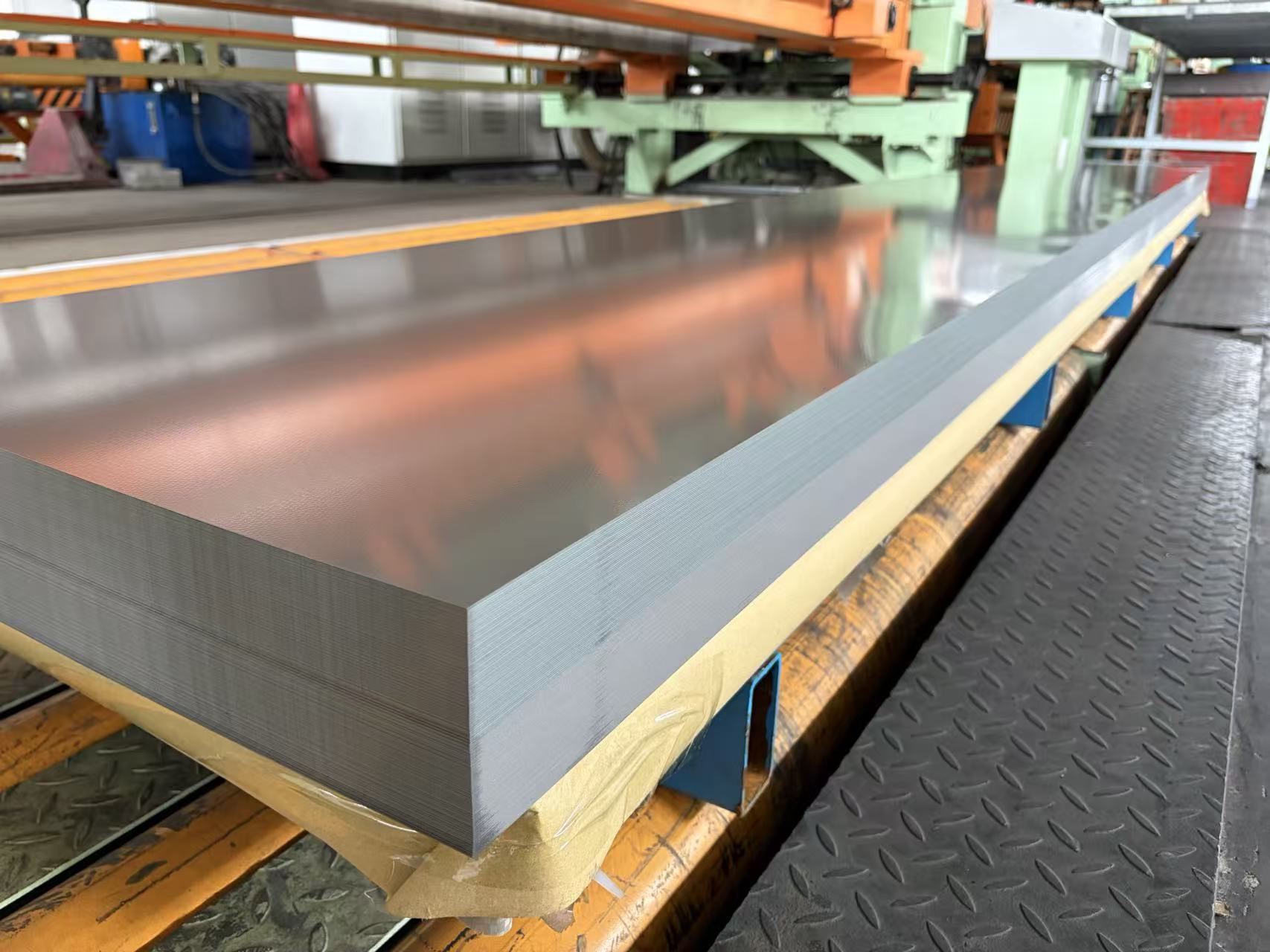
Variation in length or squareness can disturb tooling location. Poor flatness makes feeding and robotic pickup less predictable, while scratches may remain visible after forming. Material properties also govern forming behaviour, but the correct grade cannot compensate for a poorly prepared blank.
Cut accuracy at production speed depends on coordinated measurement and motion. Length, feed speed and shear position must remain synchronized through steady running and speed changes. RONGXING’s guide to flying-shear synchronization and cut accuracy explains why these variables form one process.

Acceptance should follow the intended material
A useful acceptance test uses representative material, thickness, blank length and surface expectations. Inspectors should record repeated dimensions, check diagonals and flatness, review cut edges, and inspect different levels of the stack for handling marks. The run should include normal speed changes and stacking because a precise cut can still be damaged downstream.
The correct target is a stable chain from uncoiling to protected stacking—not one good sample. RONGXING can align the commissioning and acceptance process with the customer’s downstream forming requirements. To define material, blank dimensions, surface protection and production conditions for a new line, send the project requirements before configuration begins.